
What’s in a Name?
While thinking about Jacob reading from Lehi’s record (see Whose Voice?), I noticed something unique in the verses he’s quoting. The Lord uses the name title “Lord of Hosts” six times in Jacob 2:28–33, including verse 30 itself. Jacob doesn’t use that title in any other verse throughout his seven chapters, nor in his chapters of 2 Nephi except when quoting Isaiah. It appears only in five of the seven verses that I’ve suggested come from Lehi’s record.
That shift is itself a clue to who wrote these verses. In verses 23–26, the Lord’s words to Jacob, he is “the Lord” and “the Lord God.” Then in verses 28–33 he is suddenly “the Lord of Hosts,” a title Jacob never uses in his own words anywhere else. When the name of the Lord changes, the author likely changes too. It’s one more reason to believe Jacob is reading from Lehi’s record.
In fact the only Book of Mormon authors to use that name title are Nephi (6), (Jacob) Lehi (6), and Samuel the Lamanite (3). Nephi and Jacob are quoting Isaiah (26) from the plates of brass.1 The Lord during his visit to the Nephites quotes Isaiah (1), and he adds two chapters from Malachi (10) who would have been a prophet after Lehi left Jerusalem.
The title is used 52 times in 50 verses. I would recommend reviewing each of them and see if you notice any themes. It starts to become apparent that the title “Lord of Hosts,” or “Lord of Armies” is used when God is warning of destruction and curses. I’ve compiled a chart for you to quickly review each chapter and verse. It should be notable to us how rare this name title appears in the Book of Mormon and six of those times in Jacob chapter 2.
| Book | Verse(s) |
|---|---|
| 1 Nephi (Isaiah) | 1 Nephi 20:2 |
| 2 Nephi (Isaiah) | 2 Nephi 8:15 | 2 Nephi 12:12 | 2 Nephi 13:1 | 2 Nephi 15:7,9,16,24 | 2 Nephi 16:3,5 | 2 Nephi 18:13,18 | 2 Nephi 19:7,13,19 | 2 Nephi 20:16,26,33 | 2 Nephi 23:4,13 | 2 Nephi 24:22–24,27 | 2 Nephi 27:2 |
| 2 Nephi (Nephi) | 2 Nephi 26:4–6 | 2 Nephi 27:27–28 | 2 Nephi 28:17 |
| Jacob (Lehi) | Jacob 2:28,29,30,32,33 |
| Helaman (Samuel) | Helaman 13:17–18,32 |
| 3 Nephi (Isaiah) | 3 Nephi 22:5 |
| 3 Nephi (Malachi) | 3 Nephi 24:1,5,7,10–12,14,17 | 3 Nephi 25:1,3 |
Lord of Hosts
Why is this name important? Why does it matter? What are the themes? Some that I noticed, “destruction, curses, warning, reaping, harvest, the field, angels, gathering, cut off, and war.” It makes me wonder if raising up seed is more related to internal growth and becoming the wheat to be harvested.
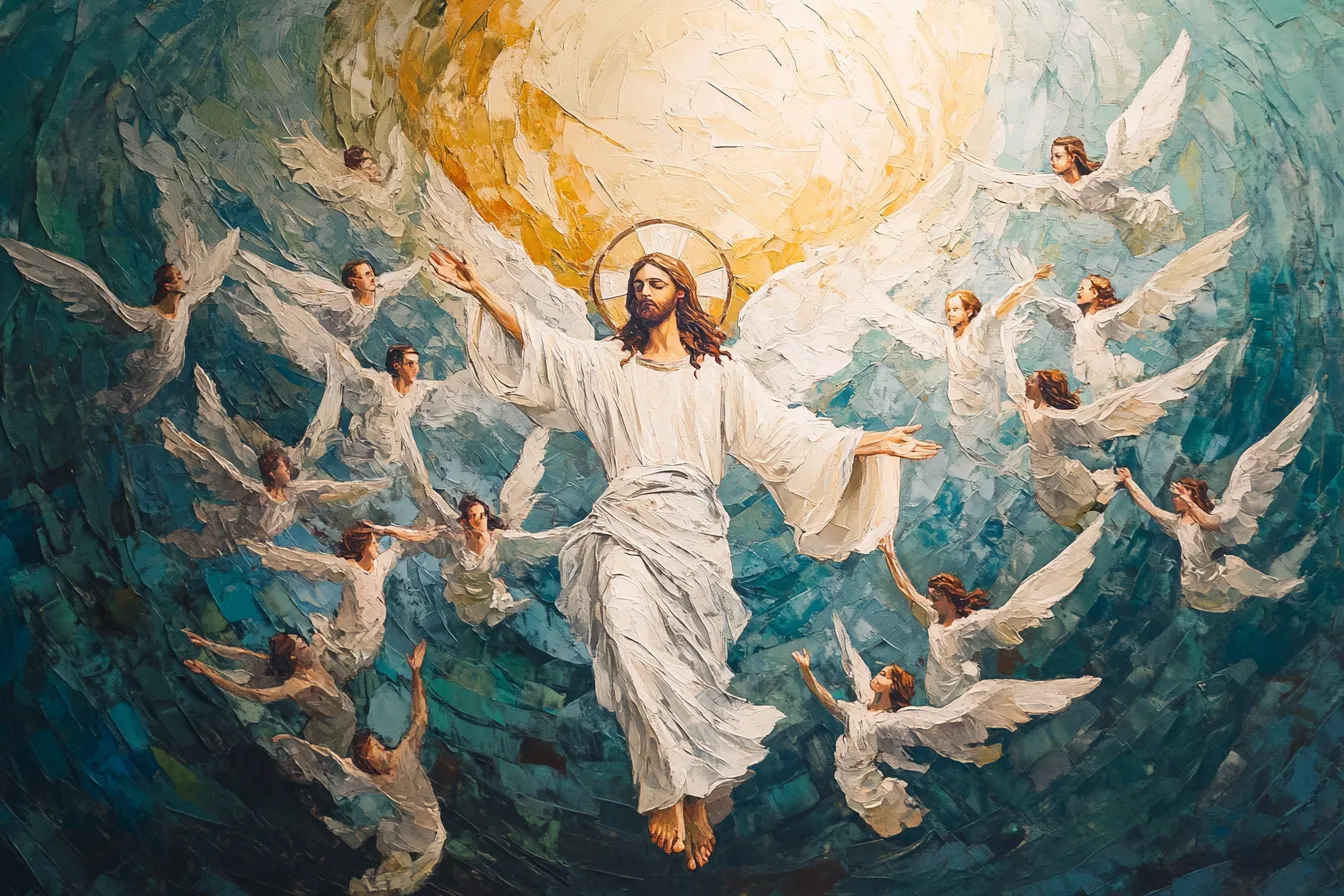
Who are the “Hosts?” This name is often translated as “Lord of Armies.” Who are they, what army or hosts?
In its broader sense the Hebrew term sôd (סוד) means a confidential discussion, a secret or plan, a circle of confidants, or council. Nearly all scholars now agree that sôd, when used in relationship to God, refers to the heavenly council/sôd of God, which humans may sometimes visit to learn divine mysteries or obtain a prophetic message to deliver to humankind. The celestial members of this council are variously called the “host of heaven” (1 Kings 22:19), “gods” or “sons of God” (Ps. 82:1, 6), or “Holy Ones.”2
Members of the Divine Council are the Hosts of Heaven. Who are members of the Divine Council? Who are the “sons of God?” How would we know if one of them were among us? How did people recognize The Son of God when he was on the earth? This topic never seems to find its way into Latter-day Saint discussions, but it’s an important one to ponder.
Almighty God
It’s worth noting that Jacob uses the name title “Almighty God” just once in his seven chapters. He uses it one other time, in 2 Nephi 9:46.
“But, notwithstanding the greatness of the task, I must do according to the strict commands of God, and tell you concerning your wickedness and abominations, in the presence of the pure in heart, and the broken heart, and under the glance of the piercing eye of the Almighty God.”3
What makes this name title significant? Why blush when having to deliver a message in front of this deity? The name title God Almighty, or Almighty God, is El Shaddai in Hebrew. Scholars debate what Shaddai originally meant, but some, like Margaret Barker, connect it to the Hebrew shad or shadayim, “breast” or “breasts,” and read El Shaddai as the God who nourishes, supplies, and satisfies. “In the more ancient names for the deities, however, we glimpse the Father (God Most High), the Son (Yahweh, the One who appeared in human form), and the Mother (El Shaddai, whose name means the God with breasts.).”4
Perhaps Jacob is reticent to deliver his message in front of “the pure in heart, and the broken heart,” and that may include Mother in Heaven. It would be fitting to talk about “feasting upon the pleasing word of God” under the direction of a God known as “one who nourishes.” Instead, they “have daggers placed to pierce their souls and wound their delicate minds.” This piercing is done “under the glance of the piercing eye of the Almighty God.” This all seems to be a play on words, as Mother is known as “Wisdom,” the one who gives sight. “Those who first heard the story of the Garden of Eden knew the Tree of Life as the symbol of Wisdom, and its fruits as her gifts: true riches, spiritual sight, everlasting life, and peace.”5
We’ve talked about the Tree of Life, known also as the House of Israel.6 “The other great symbol of wisdom was the Tree of Life. ‘She is a tree of life to those who lay hold upon her; those who hold fast to her are called happy’ (Prov 3:18). ‘Happy’ here is the Hebrew word asher, which may be word play on her name Asheratah.”7
“Now Shaddai has been translated in various ways, most often by Almighty, but the usual meaning of this Hebrew word is breasts, suggesting that El Shaddai had a female aspect. In the stories of the patriarchs, El Shaddai was associated with the gift of fertility: ‘El Shaddai bless you and make you fruitful and multiply you’ (Gen 28:3); ‘I am El Shaddai: be fruitful and multiply… kings shall spring from you’ (Gen 35:11); ‘El Shaddai … who will bless you with blessings of the breast and of the womb’ (Gen 49:25).”8
It’s interesting to see that Joseph of Egypt was given the greatest of these blessings from El Shaddai. We should read this portion of his blessing with new eyes.
“Joseph is a fruitful bough, even a fruitful bough by a well; whose branches run over the wall: The archers have sorely grieved him, and shot at him, and hated him: But his bow abode in strength, and the arms of his hands were made strong by the hands of the mighty God of Jacob; (from thence is the shepherd, the stone of Israel:) Even by the God of thy father, who shall help thee; and by the Almighty, who shall bless thee with blessings of heaven above, blessings of the deep that lieth under, blessings of the breasts, and of the womb: The blessings of thy father have prevailed above the blessings of my progenitors unto the utmost bound of the everlasting hills: they shall be on the head of Joseph, and on the crown of the head of him that was separate from his brethren.”9
The fruitful bough, or branch is fulfilled in the visionary man we call Lehi. The one that we know was brought into the Divine Council,10 the one who partook of the fruit of the Tree of Life, which fruit was “desirable to make one happy.”11
It’s fascinating to see these names used throughout this chapter. Details like these make it difficult to believe that Joseph Smith could have possessed such extensive knowledge about the ancient religion of Israel. How could he have known all these names and the intricate wordplay woven throughout the Book of Mormon?
And notice whose voice speaks verse 30. “For if I will, saith the Lord of Hosts, raise up seed unto me…” Outside of Isaiah and Malachi, the Book of Mormon uses this name only a handful of times, and nearly always when God is warning of destruction. Verse 30 is spoken in the voice of that warning, not of a permission.
Notes
- Two of Nephi’s six are in 2 Nephi 27:27–28, his expansion of Isaiah 29; the King James Isaiah doesn’t have “Lord of Hosts” in those verses. ↩
- An excellent article from William J. Hamblin, The Sôd of YHWH and the Endowment ↩
- Jacob 2:10 ↩
- Barker, Margaret. Temple Theology: An Introduction. London: SPCK Publishing, 2004, 7. ↩
- Barker, Margaret. “Wisdom and the Stewardship of Knowledge.” Bishop’s Lecture, Lincoln, 2004, 5. ↩
- A Branch of Joseph ↩
- Barker, Margaret. Temple Theology: An Introduction. London: SPCK Publishing, 2004, 88. ↩
- Barker, Margaret. Temple Theology: An Introduction. London: SPCK Publishing, 2004, 91. ↩
- Genesis 49:22–26 ↩
- 1 Nephi 1:8 ↩
- 1 Nephi 8:10 ↩
Comments