
Covenant Land
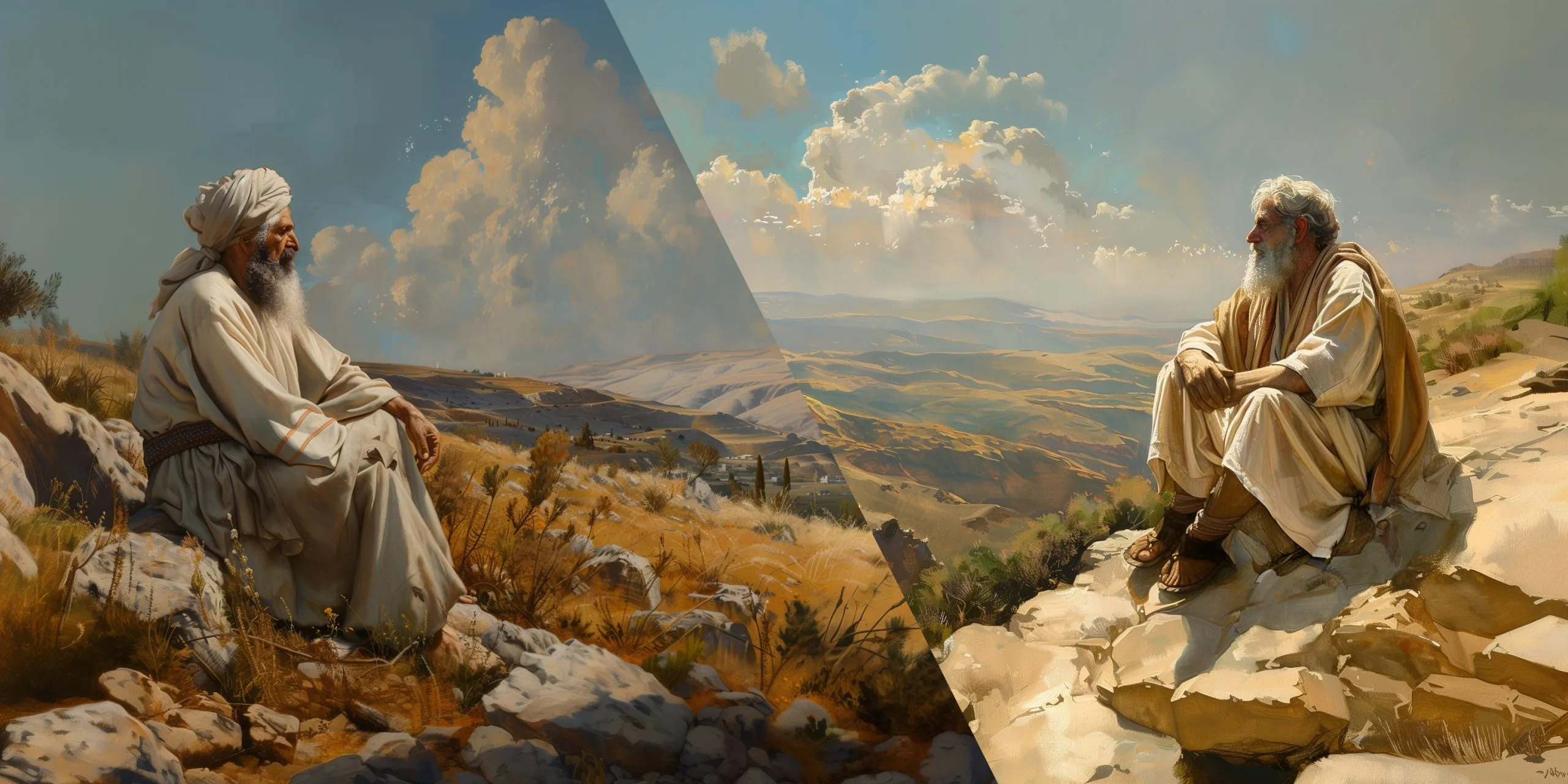
As I’ve mentioned, all of this language used to describe the Lord’s work is covenant language. The promises to Lehi are very similar to the promises, or covenants made to Abraham. Father Abraham received the land of Canaan for his inheritance and for the inheritance of all his posterity. Much of the conflict in the Middle East is between brothers who are Abraham’s sons.
Lehi’s promised land came with a covenant: blessings for keeping the commandments and curses for breaking them. I believe the one-wife commandment is one of those conditions, and that is why the Lord ties it to the land in Jacob 2:29: “this people shall keep my commandments… or cursed be the land for their sakes.”
Abraham’s covenants are still very relevant to our day; there are many promises yet to unfold. Lehi became a father like Abraham, and we should consider whether or not his covenants are still relevant to our day. Here are some similarities to consider:
A Promised Land
Abraham was given, “A strange land … For all the land which thou seest, to thee will I give it, and to thy seed for ever.”1 Lehi was also given a promised land, “…we have obtained a land of promise… the Lord hath covenanted this land unto me, and to my children forever.”2 This land was consecrated, or set apart for the branch that would come from the fruit of the loins of Joseph of Egypt.3
The definition of consecrated: “Made sacred by ceremonies or solemn rites; separated from a common to a sacred use; devoted or dedicated to the service and worship of God; made venerable.”4 It’s interesting to ponder that Joseph of Egypt was chosen and separated from his brethren, and here we have a chosen branch from his loins, also separated, to a separated land or in other words, a consecrated land.
Promise of Posterity (Seed)
Abraham was promised, “I will multiply thee, and thy seed after thee, … and if thou canst count the number of sands, so shall be the number of thy seeds.”5 While we don’t have Lehi’s record, we learn of Lehi’s posterity through Nephi, “… the angel said unto me: Look, and behold thy seed, and also the seed of thy brethren. … I beheld multitudes of people, yea, even as it were in number as many as the sand of the sea.”6
As we saw in Raise Up Seed, Abraham’s seed includes everyone who receives the gospel, and the Lord promised Lehi the same: this land is for “thy seed, and them who shall be numbered among thy seed.”
As I’ve mentioned, all those who repent will also be numbered among Lehi’s seed. Jacob echoes Isaiah to prophesy about the future destiny of this land and the seed of Lehi. These promises will be fulfilled and they will be fulfilled by those who are mortal, those in the flesh.
“For I will fulfil my promises which I have made unto the children of men, that I will do unto them while they are in the flesh—Wherefore, my beloved brethren, thus saith our God: I will afflict thy seed by the hand of the Gentiles; nevertheless, I will soften the hearts of the Gentiles, that they shall be like unto a father to them; wherefore, the Gentiles shall be blessed and numbered among the house of Israel. Wherefore, I will consecrate this land unto thy seed, and them who shall be numbered among thy seed, forever, for the land of their inheritance; for it is a choice land, saith God unto me, above all other lands, wherefore I will have all men that dwell thereon that they shall worship me, saith God.”7
Notice that these Gentiles have their hearts softened, the Lord mentions this while visiting the Nephites in Bountiful, “For thus it behooveth the Father that it should come forth from the Gentiles, that he may show forth his power unto the Gentiles, for this cause that the Gentiles, if they will not harden their hearts, that they may repent and come unto me and be baptized in my name and know of the true points of my doctrine, that they may be numbered among my people, O house of Israel;”8
And again, Nephi informs us, “And it shall come to pass, that if the Gentiles shall hearken unto the Lamb of God in that day that he shall manifest himself unto them in word, and also in power, in very deed, unto the taking away of their stumbling blocks—And harden not their hearts against the Lamb of God, they shall be numbered among the seed of thy father; yea, they shall be numbered among the house of Israel; and they shall be a blessed people upon the promised land forever; they shall be no more brought down into captivity; and the house of Israel shall no more be confounded.”9
These promises are applied based upon the condition of our hearts; once again we’re learning the importance of the parable of the sower.10
Promise of Priesthood
To Abraham the Lord promised, “I will take thee, to put upon thee my name, even the Priesthood.”11 Again, we don’t have Lehi’s record, but we can see that his posterity had the higher priesthood, “I, Jacob, having been called of God, and ordained after the manner of his holy order.”12
Because Lehi parted the veil and received a covenant, he was no longer bound by the curses that Israel suffered under. The Jews were unable to climb the mountain and part the veil.13 Their hard hearts were just as Laman and Lemuel’s and they were cut off from the Lord’s presence, “But they hardened their hearts and could not endure his presence; therefore, the Lord in his wrath, for his anger was kindled against them, swore that they should not enter into his rest while in the wilderness, which rest is the fulness of his glory.”14 They devolved into wickedness and abominations until they were destroyed and led away captive.15 They lost their land, many lost their lives, and they were ruled and oppressed by a foreign power.
The higher priesthood will likely need its own post. I will eventually get there; it’s not critical to our topic yet. Joseph restores this information in JST Genesis 14, and Alma 13 also has a lot to say about it. It should be noted that Joseph said, “All the prophets had the Melchizedek Priesthood and were ordained by God himself.”16 It can’t be passed from man to man; it has to come from the Lord’s voice directly.17
Conditions of the Covenant Land
As part of covenant-making there are promises of blessings or curses that will come from keeping or not keeping the covenant. Each party has obligations to live up to and both parties are required to know the potential outcomes.
Abraham’s covenant in Genesis 15 gives us a glimpse of how covenants were made anciently. Abraham cut the animals in half, and “a smoking furnace, and a burning lamp” passed between the pieces.18 Jeremiah describes the same rite among the people: they “cut the calf in twain, and passed between the parts thereof.”19 Walking between the halves meant, in effect, let this happen to me if I break my word. A covenant put your life on the line.
In Lehi’s case we get some of those details in 2 Nephi 1. It seems likely to me that the commandment regarding marriage is part of Lehi’s covenant. Notice the covenant curse that’s attached to this specific commandment given in verse 27, “Wherefore, this people shall keep my commandments, saith the Lord of Hosts, or cursed be the land for their sakes.”20 The blessings and curses are connected to the covenant land. Here are the conditions of Lehi’s covenant.
Covenant Blessings
- Warned to flee: “how merciful the Lord had been in warning us that we should flee”21
- Prosper in the land: “inasmuch as those whom the Lord God shall bring out of the land of Jerusalem shall keep his commandments, they shall prosper upon the face of this land;”22
- Kept from other nations: “it is wisdom that this land should be kept as yet from the knowledge of other nations;” … “they shall be kept from all other nations, that they may possess this land unto themselves.”23
- Blessed: “unto the righteous it shall be blessed forever.” … “And if it so be that they shall keep his commandments they shall be blessed upon the face of this land”24
- No enemies, or loss of inheritance: “there shall be none to molest them, nor to take away the land of their inheritance”25
- Dwell safely: “they shall dwell safely forever.”26
- A choice consecrated land: “we have obtained a land of promise, a land which is choice above all other lands;” … “this land is consecrated unto him whom he shall bring. And if it so be that they shall serve him according to the commandments which he hath given,”27
- Land of liberty: “it shall be a land of liberty unto them;”28
- Never brought into captivity: “wherefore, they shall never be brought down into captivity;”29
- Inheritance of Lehi’s seed: “a land which the Lord God hath covenanted with me should be a land for the inheritance of my seed. Yea, the Lord hath covenanted this land unto me, and to my children forever, and also all those who should be led out of other countries by the hand of the Lord.”30
Covenant Curses
- Dwindle in unbelief: “when the time cometh that they shall dwindle in unbelief,”31
- Iniquity, the land is cursed: “they shall never be brought down into captivity; if so, it shall be because of iniquity; for if iniquity shall abound cursed shall be the land for their sakes,”32
- Brought into captivity: “they shall never be brought down into captivity; if so, it shall be because of iniquity; for if iniquity shall abound cursed shall be the land for their sakes,”33; “led according to the will and captivity of the devil.”34
- God’s judgments rest on them: “the judgments of him that is just shall rest upon them.”35
- Bring other nations: “he will bring other nations unto them,”36
- Give those nations power: “and he will give unto them power,”37
- Take away the land of their possession: “and he will take away from them the lands of their possessions,”38
- Scattered and smitten: “and he will cause them to be scattered and smitten.”39
- Bloodshed and great visitations: “as one generation passeth to another there shall be bloodsheds, and great visitations among them;”40
- Deep sleep, sleep of hell: “O that ye would awake; awake from a deep sleep, yea, even from the sleep of hell,”41
- Bound by chains of hell: “and shake off the awful chains by which ye are bound, which are the chains which bind the children of men,”42
- Carried away captive: “they are carried away captive down to the eternal gulf of misery and woe.”43
- Hardened hearts: “for I have feared, lest for the hardness of your heart”44
- Fullness of God’s wrath: “the Lord your God should come out in the fulness of his wrath upon you,”45
- Cut off and destroyed: “that ye be cut off and destroyed forever;”46
- Curse upon many generations: “that a cursing should come upon you for the space of many generations;”47
- Visited by God’s wrath: “visited by sword, and by famine, and are hated, and are led according to the will and captivity of the devil.”48
When studying the Book of Mormon you may notice the authors reflecting back on these promises. The “pride cycle” that we talk so much about is probably better viewed through the lens of covenants and whether or not they kept the commandments. Were they preserved and protected when the Lamanites scourged them? The entire history that plays out is usually measured by keeping the commandments and being preserved because of this covenant.
Lehi received this promise after he left Jerusalem, and the Nephites knew these things from the beginning and we can see how things played out. We know enough about the covenant and commandments given to Lehi to see if the Nephites repented as Jacob warned them to do. “…for except ye repent the land is cursed for your sakes; and the Lamanites… shall scourge you even unto destruction.”49
Destruction
What exactly does destruction mean to these authors? Is it total annihilation? Is it a loss of land? Is it the torment of both spirit and body? Physical and spiritual? Understanding this can help us see how they were destroyed.
In the vernacular of the Book of Mormon, to destroy did not mean annihilation. It merely meant to end the organized existence of a people or to terminate their government, deprive them of a land, and end their cultural dominance. In the Book of Mormon, a people were destroyed when they lost control over their government and land. Their ability to preserve their own values and choose the way they were governed was taken over by others. Most often it was from a different ethnic group, though not always. Once people were destroyed, they were oppressed and suffered. Often they were oppressed with grievous taxes and had religious liberties removed. Then they faced a choice: either repent, in which case they came through the period of oppression with another chance; or if they were angry and rebellious, they would then be “swept away.” Being destroyed is not at all the same as being “swept away.” It is possible for people to have been destroyed and not even realize it. But when they are “swept away,” they face extinction and cannot help but notice it.50
“The “destruction” of the Nephites did not mean they all died. Rather, they lost their government, lost their identity, and lost their understanding. Nephi tells us destruction does not mean the end of a people. He describes the Jews, who were also “destroyed” in these telling words: “And as one generation hath been destroyed among the Jews because of iniquity, even so have they been destroyed from generation to generation according to their iniquities; and never hath any of them been destroyed save it were foretold them by the prophets of the Lord.” (2 Ne. 25: 9.) From this we can see the Nephite record does not regard “destruction” the same as annihilation.”51
This concept is throughout the Book of Mormon, Nephi uses it when speaking about the Israelites:
“And notwithstanding they being led, the Lord their God, their Redeemer, going before them, leading them by day and giving light unto them by night, and doing all things for them which were expedient for man to receive, they hardened their hearts and blinded their minds, and reviled against Moses and against the true and living God.
And it came to pass that according to his word he did destroy them; and according to his word he did lead them; and according to his word he did do all things for them; and there was not any thing done save it were by his word.
…And he raiseth up a righteous nation, and destroyeth the nations of the wicked.”52
So it is with us, we are being led toward the promised land or we are being destroyed. Ultimately we are either growing in light and truth or we are losing light:
And therefore, he that will harden his heart, the same receiveth the lesser portion of the word; and he that will not harden his heart, to him is given the greater portion of the word, until it is given unto him to know the mysteries of God until he know them in full.
And they that will harden their hearts, to them is given the lesser portion of the word until they know nothing concerning his mysteries; and then they are taken captive by the devil, and led by his will down to destruction. Now this is what is meant by the chains of hell.53
Light vs. dark, liberty vs. captivity, order vs. chaos. To be destroyed is to lose your land, your liberty, and your control of government. It also applies individually: we lose knowledge, or light and truth, until the devil takes us captive, we are subjected to the flesh, and we lose the ability to govern ourselves. This is when our lives get “out of control.” The first step in the LDS Addiction Recovery Manual reads, “Admit that you, of yourself, are powerless to overcome your addictions and that your life has become unmanageable.”54
Zion & Jerusalem
At the end of the book we learn more about promises regarding this promised land. Unlike the rest of the Christian world, Latter-day Saints believe that Zion will be built upon the land of the Americas. Jerusalem is the promised land of Abraham, and the Americas are the promised land of Lehi. As part of the promises of a covenant land we should be able to see the promises of potential blessings for keeping the commandments, and the promise of potential consequences for disobedience and wickedness.
During the millennium the sun will never set on the Lord’s Kingdom. In Jerusalem the Temple will be rebuilt on the Temple Mount. Zion will be in the Americas and the “remnant of the house of Joseph shall be built upon this land.” These are promises made to Joseph of Egypt, this land is for the inheritance of his posterity, they will build, “a holy city unto the Lord.” Moroni gives us insight into some of these promises made to Joseph of Egypt:
“And now I, Moroni, proceed to finish my record concerning the destruction of the people of whom I have been writing. For behold, they rejected all the words of Ether; for he truly told them of all things, from the beginning of man; and that after the waters had receded from off the face of this land it became a choice land above all other lands, a chosen land of the Lord; wherefore the Lord would have that all men should serve him who dwell upon the face thereof; And that it was the place of the New Jerusalem, which should come down out of heaven, and the holy sanctuary of the Lord.
Behold, Ether saw the days of Christ, and he spake concerning a New Jerusalem upon this land. And he spake also concerning the house of Israel, and the Jerusalem from whence Lehi should come—after it should be destroyed it should be built up again, a holy city unto the Lord; wherefore, it could not be a new Jerusalem for it had been in a time of old; but it should be built up again, and become a holy city of the Lord; and it should be built unto the house of Israel—And that a New Jerusalem should be built up upon this land, unto the remnant of the seed of Joseph, for which things there has been a type. For as Joseph brought his father down into the land of Egypt, even so he died there; wherefore, the Lord brought a remnant of the seed of Joseph out of the land of Jerusalem, that he might be merciful unto the seed of Joseph that they should perish not, even as he was merciful unto the father of Joseph that he should perish not.
Wherefore, the remnant of the house of Joseph shall be built upon this land; and it shall be a land of their inheritance; and they shall build up a holy city unto the Lord, like unto the Jerusalem of old; and they shall no more be confounded, until the end come when the earth shall pass away. And there shall be a new heaven and a new earth; and they shall be like unto the old save the old have passed away, and all things have become new. And then cometh the New Jerusalem; and blessed are they who dwell therein, for it is they whose garments are white through the blood of the Lamb; and they are they who are numbered among the remnant of the seed of Joseph, who were of the house of Israel. And then also cometh the Jerusalem of old; and the inhabitants thereof, blessed are they, for they have been washed in the blood of the Lamb; and they are they who were scattered and gathered in from the four quarters of the earth, and from the north countries, and are partakers of the fulfilling of the covenant which God made with their father, Abraham. And when these things come, bringeth to pass the scripture which saith, there are they who were first, who shall be last; and there are they who were last, who shall be first.55
This land will revert back to those who’ve inherited it, they will be numbered with the House of Israel. Abraham’s land and Lehi’s land, “for out of Zion shall go forth the law, and the word of the Lord from Jerusalem.”56 There are no guarantees however, only those who repent will receive the blessing. Those who wear stiff necks and high heads, and those who have hard hearts will be cast off.
Being a literal descendant of Abraham, or Lehi, or Joseph of Egypt will do us no good if we fail to repent. As Nephi taught his brothers, “For behold, except ye shall keep the commandments of God ye shall all likewise perish;”57 He continues, “I say unto you that as many of the Gentiles as will repent are the covenant people of the Lord; and as many of the Jews as will not repent shall be cast off; for the Lord covenanteth with none save it be with them that repent and believe in his Son, who is the Holy One of Israel.”58 It doesn’t matter if you descend from the right family line, or if you think you’ve checked all the right boxes, “Behold, the Lord esteemeth all flesh in one; he that is righteous is favored of God.”59
Even those chosen as God’s servants are chosen precisely because they choose to repent, “there were many who were ordained and became high priests of God; and it was on account of their exceeding faith and repentance, and their righteousness before God, they choosing to repent and work righteousness rather than to perish;”60 As Joseph taught us, “Behold, there are many called, but few are chosen. And why are they not chosen? Because their hearts are set so much upon the things of this world, and aspire to the honors of men…”61 Again, it comes back to the heart.
“Ephraim shall not envy Judah, and Judah shall not vex Ephraim.”62 The divided kingdom will grow into one nation, as it once was under David, although this time on separate continents.63 The writings of both nations will be a key to the unification, a tool given to the latter day Joseph, “Wherefore, the fruit of thy loins shall write; and the fruit of the loins of Judah shall write; and that which shall be written by the fruit of thy loins, and also that which shall be written by the fruit of the loins of Judah, shall grow together, unto the confounding of false doctrines and laying down of contentions, and establishing peace among the fruit of thy loins, and bringing them to the knowledge of their fathers in the latter days, and also to the knowledge of my covenants, saith the Lord.”64
“And the Lord would not suffer that they should stop beyond the sea in the wilderness, but he would that they should come forth even unto the land of promise, which was choice above all other lands, which the Lord God had preserved for a righteous people. And he had sworn in his wrath unto the brother of Jared, that whoso should possess this land of promise, from that time henceforth and forever, should serve him, the true and only God, or they should be swept off when the fulness of his wrath should come upon them.
And now, we can behold the decrees of God concerning this land, that it is a land of promise; and whatsoever nation shall possess it shall serve God, or they shall be swept off when the fulness of his wrath shall come upon them. And the fulness of his wrath cometh upon them when they are ripened in iniquity. For behold, this is a land which is choice above all other lands; wherefore he that doth possess it shall serve God or shall be swept off; for it is the everlasting decree of God. And it is not until the fulness of iniquity among the children of the land, that they are swept off. And this cometh unto you, O ye Gentiles, that ye may know the decrees of God—that ye may repent, and not continue in your iniquities until the fulness come, that ye may not bring down the fulness of the wrath of God upon you as the inhabitants of the land have hitherto done. Behold, this is a choice land, and whatsoever nation shall possess it shall be free from bondage, and from captivity, and from all other nations under heaven, if they will but serve the God of the land, who is Jesus Christ, who hath been manifested by the things which we have written.”65
If you believe the Garden of Eden was in Missouri, then this spot of ground has been “swept off” three times already. First with Noah, second with the Jaredites, and lastly with the Nephites.66 What will be the fate of the Gentiles who now occupy the promised land?67 Can we continue to deny the plea from Mormon?
Hearken, O ye Gentiles, and hear the words of Jesus Christ, the Son of the living God, which he hath commanded me that I should speak concerning you, for, behold he commandeth me that I should write, saying:
Turn, all ye Gentiles, from your wicked ways; and repent of your evil doings, of your lyings and deceivings, and of your whoredoms, and of your secret abominations, and your idolatries, and of your murders, and your priestcrafts, and your envyings, and your strifes, and from all your wickedness and abominations, and come unto me, and be baptized in my name, that ye may receive a remission of your sins, and be filled with the Holy Ghost, that ye may be numbered with my people who are of the house of Israel.68
Reflecting back on the words of Jacob, the new information given in verses 23–26 is to remind them why they were led out of Jerusalem. “I have led this people forth out of the land of Jerusalem, by the power of mine arm, that I might raise up unto me a righteous branch from the fruit of the loins of Joseph.”69 The fact that the Lord calls Lehi a branch lets us know he has a covenant and stems from the tree, the one he compared to the House of Israel.70
Jacob warns what breaking the commandment would do to that branch: “Wherefore, ye shall remember your children, how that ye have grieved their hearts because of the example that ye have set before them; and also, remember that ye may, because of your filthiness, bring your children unto destruction, and their sins be heaped upon your heads at the last day.”71
As we read Jacob’s sermon do we see covenant language and themes surrounding this commandment? We should be looking for the blessings and the curses associated with raising up seed. To inherit the full blessings of the consecrated land, Lehi’s covenant requires us to keep the commandments of this land. “And if it so be that they shall serve him according to the commandments which he hath given, it shall be a land of liberty unto them;” That includes the commandment, “For there shall not any man among you have save it be one wife; and concubines he shall have none;”72
The curse in Jacob 2:29, “cursed be the land for their sakes,” is the same curse Lehi was promised in 2 Nephi 1:7: “if iniquity shall abound cursed shall be the land for their sakes.” The one-wife commandment isn’t a side rule that can be set aside. It is one of the conditions of the land itself.
The Nauvoo Temple
D&C 124 uses this same covenant language. I would encourage each of you to explore this chapter on your own. Were the early Saints blessed or cursed? How can we know? If the curses last until the 3rd and 4th generation, then have those curses passed? The last of the 4th generation was Eldred G. Smith who passed on April 4, 2013. Do we inherit those curses?
Search the Scriptures—search the revelations which we publish, and ask your Heavenly Father, in the name of His Son Jesus Christ, to manifest the truth unto you, and if you do it with an eye single to His glory, nothing doubting, He will answer you by the power of His Holy Spirit. You will then know for yourselves and not for another. You will not then be dependent on man for the knowledge of God; nor will there be any room for speculation. No; for when men receive their instruction from Him that made them, they know how He will save them. Then again we say: Search the Scriptures, search the Prophets and learn what portion of them belongs to you and the people of the nineteenth century. You, no doubt, will agree with us, and say, that you have no right to claim the promises of the inhabitants before the flood; that you cannot found your hopes of salvation upon the obedience of the children of Israel when journeying in the wilderness, nor can you expect that the blessings which the Apostles pronounced upon the churches of Christ eighteen hundred years ago, were intended for you. Again, if others’ blessings are not your blessings, others’ curses are not your curses; you stand then in these last days, as all have stood before you, agents unto yourselves, to be judged according to your works.73
We should study to understand what actually happened with the Latter-day Saints. This video was helpful to me in understanding what unfolded in Nauvoo.
In this talk, Ryan Fisher of NephiteExplorer argues that historians have missed a piece of the early church’s story: the land itself. Reading Ether 2 and Jacob 2 together, he treats the promised land as having conditions attached (serve God or be swept off) and walks through Kirtland, Missouri, and Nauvoo in that light. He starts with Jacob’s warning about seeking riches and compares it to land speculation in Kirtland (13:19). Then he turns to the “grosser crime.” He reads verse 30 much as this series does: when the Lord wants to raise up seed, he commands his people to depart, as he did Lehi (23:42). He also walks through every plural marriage in scripture, from Lamech to King Noah and Riplakish. The second half covers D&C 124 and the command to build the Nauvoo Temple and the Nauvoo House, and argues the Saints didn’t finish them in the time the Lord gave (38:03). A few things to know going in: Fisher holds a Heartland view of Book of Mormon geography, which he mentions but doesn’t argue here. He suggests that temple-centered worship after Nauvoo was a step down from the fulness Joseph sought. And he closes with his concerns about Utah’s 2020 change to its bigamy law.
Since giving this talk, Fisher has left the church and no longer believes in the land covenant he describes here. In a 2023 video he argued that nearly two hundred years without America being swept off shows the covenant is a myth. But as I mentioned above, D&C 124 speaks of the third and fourth generation, and the last of that fourth generation, Eldred G. Smith, died in 2013, only ten years before he made that video. The covenant has hardly had time to play out. I still think he got a lot right in this talk.
 Play: The Missing Piece (NephiteExplorer)
Other Sources for Study
Notes
- Abraham 2:6; see also, Genesis 12:7; Genesis 13:14–15 ↩
- 2 Nephi 1:5 ↩
- 2 Nephi 3:5, Jacob 2:25, & 2 Nephi 1:7, 32 ↩
- Consecrated 1828 Dictionary ↩
- Abraham 3:14 ↩
- 1 Nephi 12:1 ↩
- 2 Nephi 10:17–19 ↩
- 3 Nephi 21:6 ↩
- 1 Nephi 14:1–2 ↩
- Matthew 13:1–23 ↩
- Abraham 1:18 ↩
- 2 Nephi 6:2, see also, Alma 13, & D&C 107:3 ↩
- D&C 84:19–26 ↩
- D&C 84:24 ↩
- Even after a remnant was restored to the land, they continued to fight against God, see 2 Nephi 10:3–6 ↩
- Teachings of the Prophet Joseph Smith, p. 181 ↩
- “It being after the order of the Son of God; which order came, not by man, nor the will of man… And it was delivered unto men by the calling of his own voice, according to his own will, unto as many as believed on his name.” JST, Gen 14:28-29 ↩
- Genesis 15:10, 17 ↩
- Jeremiah 34:18 ↩
- Jacob 2:29 ↩
- 2 Nephi 1:3 ↩
- 2 Nephi 1:9,20 ↩
- 2 Nephi 1:8–9 ↩
- 2 Nephi 1:7, 9 ↩
- 2 Nephi 1:9 ↩
- 2 Nephi 1:9 ↩
- 2 Nephi 1:5, 7 ↩
- 2 Nephi 1:7 ↩
- 2 Nephi 1:7 ↩
- 2 Nephi 1:5 ↩
- 2 Nephi 1:10 ↩
- 2 Nephi 1:7 ↩
- 2 Nephi 1:7 ↩
- 2 Nephi 1:18 ↩
- 2 Nephi 1:10 ↩
- 2 Nephi 1:11 ↩
- 2 Nephi 1:11 ↩
- 2 Nephi 1:11 ↩
- 2 Nephi 1:11 ↩
- 2 Nephi 1:12 ↩
- 2 Nephi 1:13 ↩
- 2 Nephi 1:13 ↩
- 2 Nephi 1:13 ↩
- 2 Nephi 1:17 ↩
- 2 Nephi 1:17 ↩
- 2 Nephi 1:17 ↩
- 2 Nephi 1:18 ↩
- 2 Nephi 1:18 ↩
- Jacob 3:3 ↩
- Restoration Edition, Glossary: Destroy ↩
- Denver Snuffer, Nephi’s Isaiah, footnote 225 ↩
- see, 1 Nephi 17:30–43 ↩
- Alma 12:10–11 ↩
- Recovery Manual | Find a Recovery Meeting ↩
- Ether 13:1–12 ↩
- Isaiah 2:3 ↩
- 2 Nephi 30:1 ↩
- 2 Nephi 30:2 ↩
- 1 Nephi 17:35 ↩
- Alma 13:10 ↩
- D&C 121:34–35 ↩
- Isaiah 11:13 ↩
- “The word of the Lord came again unto me, saying, Moreover, thou son of man, take thee one stick, and write upon it, For Judah, and for the children of Israel his companions: then take another stick, and write upon it, For Joseph, the stick of Ephraim, and for all the house of Israel his companions: And join them one to another into one stick; and they shall become one in thine hand.” – Ezekiel 37:15–17 The traditional interpretation of this is the unification of nations. ↩
- 2 Nephi 3:12 ↩
- Ether 2:7–12 ↩
- Jacob 5:43–45 ↩
- “And thus, with the sword and by bloodshed the inhabitants of the earth shall mourn; and with famine, and plague, and earthquake, and the thunder of heaven, and the fierce and vivid lightning also, shall the inhabitants of the earth be made to feel the wrath, and indignation, and chastening hand of an Almighty God, until the consumption decreed hath made a full end of all nations;” – D&C 87:6 ↩
- 3 Nephi 30:1–2 ↩
- Jacob 2:25 ↩
- Yea, even my father spake much concerning the Gentiles, and also concerning the house of Israel, that they should be compared like unto an olive tree, whose branches should be broken off and should be scattered upon all the face of the earth. – 1 Nephi 10:12 ↩
- Jacob 3:10 ↩
- Jacob 2:27 ↩
- Teachings of the Prophet Joseph Smith, pp. 11-12 ↩
Comments