
No Kings Upon the Land
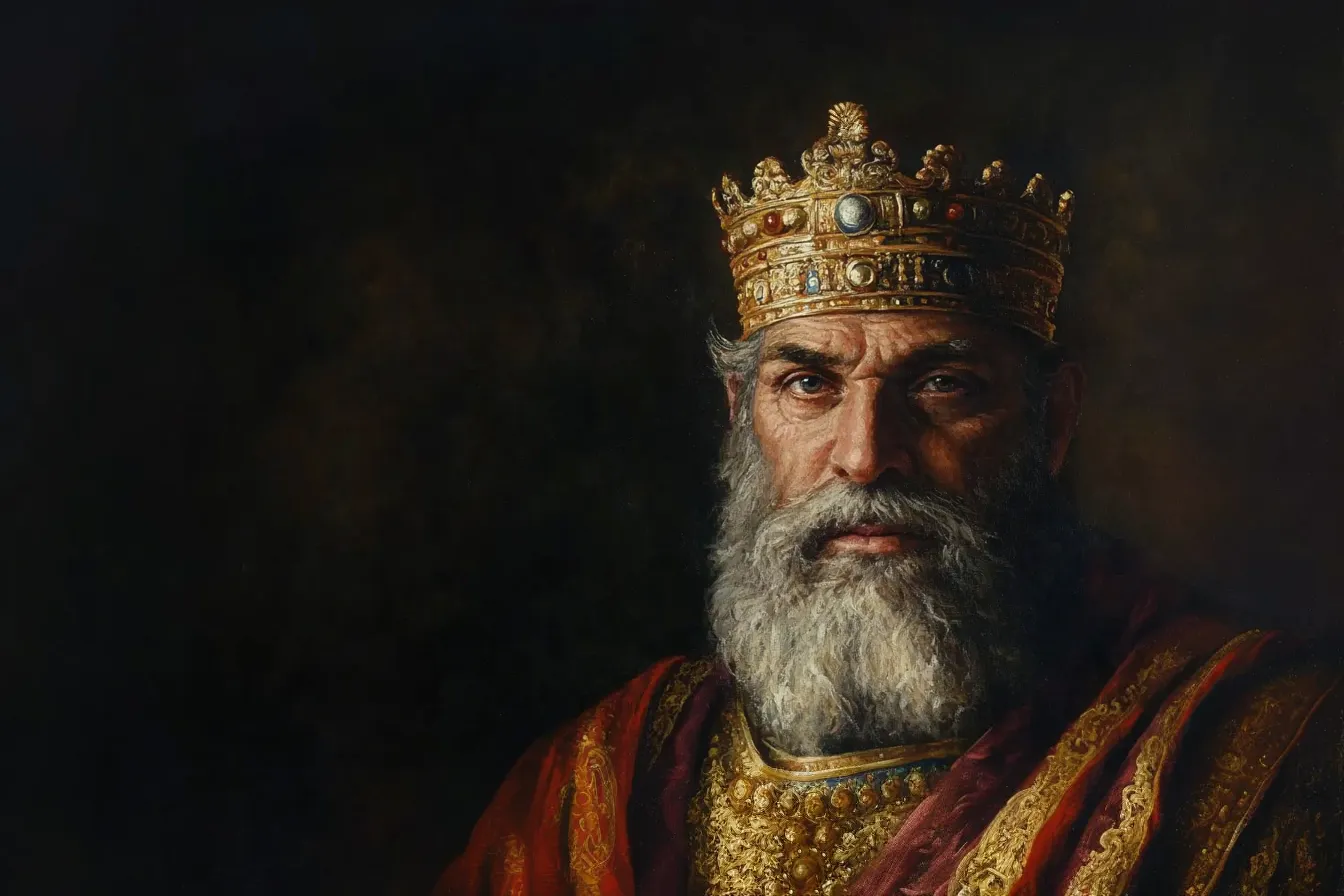
“And this land shall be a land of liberty unto the Gentiles, and there shall be no kings upon the land, who shall raise up unto the Gentiles.… For he that raiseth up a king against me shall perish, for I, the Lord, the king of heaven, will be their king, and I will be a light unto them forever, that hear my words.”1
Every time the Book of Mormon uses the words “many wives and concubines,” it is describing a king or a people under a king. Mosiah II had the records of every one of them, and after reading them he ended the reign of kings among the Nephites. This part follows those records and the kings in them, and asks what they meant to a people like Jacob’s, who had just crowned a new king and begun to want what David and Solomon had.
Judges and Kings
Israel was originally governed by judges for about 450 years before demanding a king, despite the Lord’s preference for a different system: “And after that he gave unto them judges about the space of four hundred and fifty years, until Samuel the prophet.”2
When they insisted on having a king, the Lord made it clear that this choice was a rejection of His rule: “And the Lord said unto Samuel, Hearken unto the voice of the people in all that they say unto thee: for they have not rejected thee, but they have rejected me, that I should not reign over them.”3
Similarly, the Nephites also desired a king, and Nephi was reluctant to take on that role.4 It’s interesting to see how the Nephite civilization nearly inverts Israel’s pattern of governance. Israel was ruled by judges for about 450 years before transitioning to kings.5 In contrast, the Nephites began with kings for about 480 years before switching to a system of judges.6
The Nephites also inverted the geographic arrangement of their lands compared to biblical Israel. “Now the land south was called Lehi [Joseph], and the land north was called Mulek [Judah], which was after the son of Zedekiah; for the Lord did bring Mulek into the land north, and Lehi into the land south.”7
In biblical lands, Judah was in the south and Joseph’s descendants (Ephraim and Manasseh) were in the north. Yet in the Book of Mormon, this is reversed: Mulek, the heir to the throne in Jerusalem and the only surviving son of Zedekiah, was brought to the land north.8 As a direct descendant of David, he was the rightful heir to the throne. Meanwhile, Lehi, a descendant of Joseph, was led to the land south.
It was under Mosiah I that the remaining righteous Nephites discovered the land of Zarahemla and united with the people of Mulek, descendants of the royal line of David through Zedekiah’s son, who had escaped Jerusalem’s destruction.9
Why wouldn’t they recognize and reinstate the rightful heir to the throne when the two groups merged? Perhaps it is because this land was given by covenant to Joseph of Egypt and Lehi,10 rather than being governed by Judahite covenants or laws. This suggests that kingship under the House of David may not have held divine authority in this new land. Instead, they all assimilate with the Nephites and accept Mosiah I as king. “And now all the people of Zarahemla were numbered with the Nephites, and this because the kingdom had been conferred upon none but those who were descendants of Nephi.”11
One other intriguing detail is Mulek’s name. Hugh Nibley suggested it means “little king” in Arabic.12 The Printer’s Manuscript spells it Muloch,13 which sounds like Moloch, the god of child sacrifice.14 Was Zedekiah’s son marked for the fire and delivered from it, like Abraham?15 The record doesn’t say, but the question is worth pondering.
Mulek was the last flicker of a royal line that had been waning since Solomon, when Zedekiah’s eyes were put out and his sons slain.16
King Benjamin
Mosiah II had one example of a righteous king, and it was his father. When he explained why the Nephites should give up kings, he said that if they “could have men for your kings who would do even as my father Benjamin did for this people,” then it would be well to have kings.17 Benjamin had “not sought gold nor silver” from his people, the very thing the Nephites began to search for under the second king.18 He labored “with mine own hands that I might serve you, and that ye should not be laden with taxes, and that there should nothing come upon you which was grievous to be borne.”19 King Noah and the Jaredite king Riplakish did the opposite. Noah “laid a tax of one fifth part of all they possessed,” their gold and silver among it, “to support himself, and his wives and his concubines,” and he “built many elegant and spacious buildings.”20 Riplakish “did lay that upon men’s shoulders which was grievous to be borne; yea, he did tax them with heavy taxes; and with the taxes he did build many spacious buildings.”21
Under Benjamin, the Nephites, descended from Joseph, and the people of Zarahemla, descended from Judah through Mulek, also entered one covenant together and took upon themselves the name of Christ.22 Joseph also taught that “the throne and kingdom of David is to be taken from him and given to another by the name of David in the last days, raised up out of his lineage.”23 It appears that what we see with King Benjamin may mirror a future event in our day, when Ephraim and Judah will be united as a people.
King Mosiah II
After King Benjamin died, his son Mosiah II took the throne, and he brought all of the Nephite records together. Under his reign, the plates of brass, the Nephite plates (plates of Lehi,24 plates of Nephi,25 plates of Jacob26), the record of Zeniff,27 and the record of the Jaredites were all gathered and preserved in one place.28
Ammon knew the plates they found were important to them, “Doubtless a great mystery is contained within these plates.”29 It was King Limhi’s people who found them and he asked Ammon, “Knowest thou of any one that can translate? For I am desirous that these records should be translated into our language; for, perhaps, they will give us a knowledge of a remnant of the people who have been destroyed, from whence these records came; or, perhaps, they will give us a knowledge of this very people who have been destroyed; and I am desirous to know the cause of their destruction.”30
It is through King Mosiah II that we learn about the gift of seership, as explained by Ammon to king Limhi: “Now Ammon said unto him: I can assuredly tell thee, O king, of a man that can translate the records; for he has wherewith that he can look, and translate all records that are of ancient date; and it is a gift from God. And the things are called interpreters, and no man can look in them except he be commanded, lest he should look for that he ought not and he should perish. And whosoever is commanded to look in them, the same is called seer. And behold, the king of the people who are in the land of Zarahemla is the man that is commanded to do these things, and who has this high gift from God.”31
The interpreters had been preserved for this very purpose: “that he should discover to every creature who should possess the land the iniquities and abominations of his people.”32 Those are the words the Lord used of the Nephites’ many wives and concubines.33
Through the gift of seership and the wisdom of King Mosiah II, we see a major shift among the Nephite people, away from kings. As King Mosiah II studied the sacred records in his possession, he gained a broader understanding of how kingship had led to corruption and destruction among past civilizations. These records likely shaped his decision to abolish the monarchy and establish a system of judges. Now, consider the records Mosiah II had and how each one may have influenced this pivotal change.34
Lehi, the Plates of Brass, and Jerusalem
A recurring theme in the scriptures is that God, as the ultimate Seer, watches over His people and unfolds His purposes according to His divine foresight:
“Behold, the eye of the Lord is upon them that fear him, upon them that hope in his mercy.”35
“The eyes of the Lord are in every place, beholding the evil and the good.”36
It is interesting to see that all kings in the scriptures are judged by how they stand in the sight of God. Their success or failure is not measured by political power, military might, or economic prosperity, but by whether they did what was “right in the sight of the Lord.”37 Jacob recognizes this reality when he delivers his sermon “under the glance of the piercing eye of the Almighty God.”38 He warns his people: “O that he would show you that he can pierce you, and with one glance of his eye he can smite you to the dust!”39
Lehi had a unique perspective on this truth. Not only did he witness firsthand the wickedness of Judah’s rulers, but he also had access to the plates of brass, which preserved God’s judgments on past kings. Lehi would have known from both experience and scripture how the Lord viewed the kings of his homeland.
The plates of brass likely contained detailed records about Israel’s kings, including their failures. David and Solomon, though remembered as powerful rulers, were not exempt from divine judgment:
“And Solomon did evil in the sight of the LORD, and went not fully after the LORD, as did David his father.”40
However, Joseph Smith’s Inspired Version (JST) clarifies this passage, altering the meaning to:
“And Solomon did evil in the sight of the LORD, as David, his father, and went not fully after the Lord.”41
This revision places David and Solomon in the same category, reinforcing the idea that neither of them should be viewed as models of righteousness. We can only wonder what the plates of brass said about David and Solomon. Perhaps Joseph was restoring what was lost, and what the plates of brass contained.
King Zedekiah: The Last King of Judah
Lehi lived under the reign of King Zedekiah, the last ruler of Judah before Jerusalem fell to Babylon. Like many before him, he followed in the pattern of disobedience: “Zedekiah was twenty and one years old when he began to reign, and he reigned eleven years in Jerusalem. And his mother’s name was Hamutal, the daughter of Jeremiah of Libnah. And he did that which was evil in the sight of the LORD, according to all that Jehoiakim had done.”42
This historical backdrop shaped Lehi’s prophetic mission. He saw corruption at the highest levels, and through divine revelation and the records on the plates of brass, he understood the pattern of wicked kings leading their people to destruction.
Lehi was ultimately commanded to flee from Jerusalem, and shortly thereafter, the city was destroyed.43 The people of Judah suffered the consequences of departing from the Lord and His commandments, and it appears that the abomination of polygamy was among them. The Lord told Lehi that He had “seen the sorrow, and heard the mourning of the daughters of my people in the land of Jerusalem,” and He warned that men who broke this commandment would “lead away captive the daughters of my people.”44
Biblical Kings and Polygamy
King Saul (1050–1010 BCE) – 1 Samuel 14:50, & 2 Samuel 3:7 (possible)
King David (1010–970 BCE) – 2 Samuel 5:13, & 1 Chronicles 3:1–9
King Solomon (970–931 BCE) – 1 Kings 11:1–3
King Rehoboam (931–913 BCE) – 2 Chronicles 11:21
King Abijah (Abijam) (913–910 BCE) – 2 Chronicles 13:21
King Ahab (874–853 BCE) – 1 Kings 20:7
King Jehoram (853–841 BCE) – 2 Chronicles 21:17
King Jehoiachin (597 BCE) – 2 Kings 24:15
King Zedekiah (597–586 BCE) – Jeremiah 38:23
Monogamy vs. Polygamy – Examples from the Scriptures
Mosiah I and the Nephite Kings
From the plates of Nephi, the plates of Jacob, and Lehi’s Record, we gain insight into the early Nephite monarchy and the challenges they faced. Under the rule of the second Nephite king, corruption began to spread among the people: “And now it came to pass that the people of Nephi, under the reign of the second king, … desiring many wives and concubines…”45
The Nephites had fallen into grave sin, even surpassing the Lamanites in iniquity: “Ye have come unto great condemnation; for ye have done these things which ye ought not to have done. Behold, ye have done greater iniquities than the Lamanites, our brethren.”46
Jacob warned that unless the people repented, “the Lord God will lead away the righteous out from among you.”47 Generations later it came to pass: “the more wicked part of the Nephites were destroyed,” and Mosiah I, like Lehi before him, was “warned of the Lord that he should flee out of the land of Nephi.”48 With Mosiah I’s departure, the Nephites entered a new era, one that would reshape their civilization and governance.
King Noah and the Corruption of the Nephites
Through the record of Zeniff and the account of Alma,49 we learn about the moral and spiritual collapse under King Noah, a king whose reign mirrored the sins of Jerusalem’s kings and of the second Nephite king in Jacob’s day. Like that king, Noah was the second to reign, after his father Zeniff, and he “did not walk in the ways of his father.”50
Noah’s reign was marked by disobedience, excess, and moral corruption: “For behold, he did not keep the commandments of God, but he did walk after the desires of his own heart. And he had many wives and concubines. And he did cause his people to commit sin, and do that which was abominable in the sight of the Lord. Yea, and they did commit whoredoms and all manner of wickedness.”51
His influence extended beyond himself; his priests followed in his footsteps: “…and also his priests, and their wives and their concubines…”52
Even Alma the Elder,53 before his conversion, may have been entangled in Noah’s sins. In his later words, he acknowledges his own past transgressions: “But remember the iniquity of king Noah and his priests; and I myself was caught in a snare, and did many things which were abominable in the sight of the Lord, which caused me sore repentance;”54
This presents a sad irony: those who returned to the land of their first inheritance55 found themselves falling into the very same sins that had plagued the Nephites in Jacob’s time. Instead of learning from history, they repeated it, justifying their wickedness through the same misguided traditions.
Lessons from the Jaredite Kings
The final historical record King Mosiah II translated was the Plates of Ether, which preserved the rise and fall of the Jaredite civilization. The Jaredites were warned from the beginning. When the people first asked for a king, “this was grievous unto them. And the brother of Jared said unto them: Surely this thing leadeth into captivity.”56 Generations later, the reign of King Riplakish stands out as a familiar pattern of corruption, oppression, and immorality: “And it came to pass that Riplakish did not do that which was right in the sight of the Lord, for he did have many wives and concubines, and did lay that upon men’s shoulders which was grievous to be borne; yea, he did tax them with heavy taxes; and with the taxes he did build many spacious buildings.”57 After forty-two years “the people did rise up in rebellion against him… insomuch that Riplakish was killed, and his descendants were driven out of the land.”58
Unlike the other records, which Mosiah read to the people soon after they came to Zarahemla,59 the Jaredite plates had to wait for translation. Limhi’s people found them, Mosiah received them when Limhi’s people escaped to Zarahemla, and he translated them only near the end of his reign.60 All that time the people were “desirous beyond measure to know concerning those people who had been destroyed.”61 When Mosiah finished, their response was both sorrowful and enlightening: “Now this account did cause the people of Mosiah to mourn exceedingly, yea, they were filled with sorrow; nevertheless it gave them much knowledge, in the which they did rejoice.”62
The Jaredite records confirmed what history had already demonstrated. They reinforced the recurring dangers of unchecked kingship: polygamy, heavy taxation, oppression, and the inevitable downfall that followed. These lessons played a key role in Mosiah’s decision to abolish kingship altogether, replacing it with a system of judges.63
Judges: The End of Kingship
After King Mosiah II gathered and translated the records of the Jaredites, he made a radical decision: he abolished the Nephite monarchy and established a system of judges. This change was not made lightly; Mosiah had four key historical witnesses before him:
- The Kingdom of Israel – Once united, it split in two, leading to eventual destruction.
- The First Nephite Kingdom – His grandfather, Mosiah I, fled after witnessing its downfall.64
- King Noah’s Regime – His tyranny led to captivity and destruction.
- The Jaredites – Their entire civilization was wiped out due to corruption.
With these examples in mind, Mosiah declared: “For behold, how much iniquity doth one wicked king cause to be committed, yea, and what great destruction! Yea, remember king Noah, his wickedness and his abominations, and also the wickedness and abominations of his people. Behold what great destruction did come upon them; and also because of their iniquities they were brought into bondage.”65
Seeing the pattern of destruction tied to wicked kings, Mosiah knew the risk was too great. He proposed a government based on judges, ensuring wise men would judge the people according to God’s commandments: “Therefore I will be your king the remainder of my days; nevertheless, let us appoint judges, to judge this people according to our law; and we will newly arrange the affairs of this people, for we will appoint wise men to be judges, that will judge this people according to the commandments of God.”66
Side by side, the four records Mosiah held tell the same story:
| Limhi and Alma | Mosiah I | Lehi | Ether | |
|---|---|---|---|---|
| Kings | King Noah | The Nephite kings | The kings of Israel and Judah | The Jaredite kings |
| Record | Record of Zeniff, Mosiah 25:5; account of Alma, Mosiah 25:6 | Plates of Nephi, Mosiah 1:6; plates of Jacob, Jacob 3:14 | Plates of brass, 1 Nephi 5:10–16; Mosiah 1:3–4 | Plates of Ether, Mosiah 28:11–17; Ether 1:1–5 |
| Many wives | Noah, Mosiah 11:2; his priests, Mosiah 11:4 | Under the second king, Jacob 1:15; Jacob 2:23–24 | David, 2 Samuel 5:13; Solomon, 1 Kings 11:3 | Riplakish, Ether 10:5–8 |
| What followed | Noah burned, Mosiah 19:20; Limhi in bondage, then escapes, Mosiah 22:1–13; Alma flees, Mosiah 18:34–35, and reaches Zarahemla, Mosiah 24:25 | The more wicked destroyed, the righteous led away, Omni 1:5, 12–13; joined with the people of Zarahemla, Omni 1:19 | Israel carried away, 2 Kings 17:6–18; Judah destroyed, 2 Kings 25:1–21; Lehi’s family led out, 1 Nephi 2:2 | The whole people destroyed; Coriantumr alone survives, Ether 15:31–34 |
Four Kings, One Phrase
The words “many wives and concubines” appear exactly four times in the Book of Mormon, and every one is about a king:
- the Nephites “under the reign of the second king”67
- David and Solomon68
- King Noah69
- the Jaredite king Riplakish70
Mosiah II held the records behind all four: the plates of brass, the plates of Nephi and Jacob, the record of Zeniff, and the plates of Ether. He read them, and he ended the kings.
Back to Jacob
Jacob gave his sermon to a people “under the reign of the second king,” who had begun “desiring many wives and concubines.”71 Every other king in the Book of Mormon who had many wives and concubines led his people toward division, bondage, or destruction, and the king who read all their records ended kingship altogether. Read in that setting, verse 30 can hardly be the Lord making room for what those kings did. He is speaking to a people starting down the same road.72
The Problem with Kingship
When Alma’s people wanted to make him their king, he refused: “It is not expedient that we should have a king; for thus saith the Lord: Ye shall not esteem one flesh above another, or one man shall not think himself above another.”73 He allowed that “if it were possible that ye could always have just men to be your kings it would be well for you to have a king.”74 But he had lived under Noah, and he told them to “stand fast in this liberty wherewith ye have been made free, and that ye trust no man to be a king over you.”75
However, history proved that righteous kings were rare: “The sins of many people have been caused by the iniquities of their kings.”76 A king’s wickedness spreads through corruption, perverting the ways of righteousness: “… and thus an unrighteous king doth pervert the ways of all righteousness.”77 Worst of all, overthrowing a wicked king required bloodshed: “And behold, now I say unto you, ye cannot dethrone an iniquitous king save it be through much contention, and the shedding of much blood.”78 Thus, Mosiah’s decision to abolish kingship wasn’t just about avoiding potential problems; it was about breaking a destructive cycle.
Joseph Smith seemed to recognize the same pattern that led Mosiah II to reject monarchical rule. He warned that power and authority almost inevitably lead to unrighteous dominion: “Behold, there are many called, but few are chosen. And why are they not chosen? Because their hearts are set so much upon the things of this world, and aspire to the honors of men, that they do not learn this one lesson—That the rights of the priesthood are inseparably connected with the powers of heaven, and that the powers of heaven cannot be controlled nor handled only upon the principles of righteousness.”79
The natural tendency of men in power is to seek control, to gratify their ambition, and to abuse their authority. “We have learned by sad experience that it is the nature and disposition of almost all men, as soon as they get a little authority, as they suppose, they will immediately begin to exercise unrighteous dominion.”80 This is why Mosiah saw kingship as a dangerous institution: it gave men the ability to govern without the accountability required by righteousness.
The Lord Himself rejected this model of rule. Though He is our King, He came as a servant: “The kings of the Gentiles exercise lordship over them; and they that exercise authority upon them are called benefactors. But ye shall not be so: but he that is greatest among you, let him be as the younger; and he that is chief, as he that doth serve. For whether is greater, he that sitteth at meat, or he that serveth? is not he that sitteth at meat? but I am among you as he that serveth.”81
Mosiah’s rejection of kingship was not merely a political reform. It was an acknowledgment that true righteous leadership must mirror Christ’s model of servanthood. Joseph Smith reinforced this principle by teaching that the only legitimate way to wield power is through humility, persuasion, and love: “No power or influence can or ought to be maintained by virtue of the priesthood, only by persuasion, by long-suffering, by gentleness and meekness, and by love unfeigned.”82
Rather than commanding loyalty through dominion, the Lord’s true servants lead through charity, virtue, and pure knowledge.83 This is the model of kingship that Christ exemplified, it’s what Mosiah’s father, King Benjamin, exemplified, and it is the model that Mosiah sought to implement by abolishing the throne and replacing it with a system of judges accountable to the people and to God.
Latter-day Saints
All of these kingdoms, Israel, the Nephites, and the Jaredites, share a common pattern of corruption and downfall. A central part of this pattern is the abomination of polygamy, which repeatedly emerges as a key factor in their decline.
From David and Solomon to the Nephite kings and Jaredite rulers, the scriptures consistently portray polygamy as a twisting of God’s commandments that leads to oppression, moral decay, and destruction. The Nephites were explicitly warned: “For behold, I, the Lord, have seen the sorrow, and heard the mourning of the daughters of my people in the land of Jerusalem, yea, and in all the lands of my people, because of the wickedness and abominations of their husbands.”84
Mosiah had the records of three fallen peoples, and he acted on what they taught. We have a portion of those same records. Of the Jaredite account, Mosiah said “it is expedient that all people should know the things which are written in this account.”85 Alma told his son Helaman that the Lord would bring the Jaredites’ secret works and abominations to light “unto every nation that shall hereafter possess the land,”86 and that he should “teach them that these people were destroyed on account of their wickedness and abominations and their murders.”87
The prophets who kept these records knew who would read them, and they spoke to us directly:
- “And this cometh unto you, O ye Gentiles, that ye may know the decrees of God—that ye may repent, and not continue in your iniquities until the fulness come.”88
- “Wherefore, O ye Gentiles, it is wisdom in God that these things should be shown unto you, that thereby ye may repent of your sins.”89
- “Behold, I speak unto you as if ye were present, and yet ye are not. But behold, Jesus Christ hath shown you unto me, and I know your doing.”90
- “Give thanks unto God that he hath made manifest unto you our imperfections, that ye may learn to be more wise than we have been.”91
Mosiah read the records and ended the kings. We have been handed the same records, with the same warning written on them for us.
The same words came back in our own history.
| The words | |
|---|---|
| Jacob 2:24 | “Behold, David and Solomon truly had many wives and concubines, which thing was abominable before me, saith the Lord.” |
| Hyrum Smith, May 14, 1843 | “there were many that had a great deal to say about the ancient order of things as Solomon and David having many wives and concubines — but it’s an abomination in the sight of god”92 |
| D&C 132:1 | “Verily, thus saith the Lord unto you my servant Joseph, that inasmuch as you have inquired of my hand to know and understand wherein I, the Lord, justified my servants Abraham, Isaac, and Jacob, as also Moses, David and Solomon, my servants, as touching the principle and doctrine of their having many wives and concubines.”93 |
If the Book of Mormon is correct, and this pattern holds true, then the Latter-day Saints, who made polygamy a central practice in the 19th century, walked the same path as the fallen peoples before them, and the same warnings apply to us.
The Book of Mormon repeatedly warns that a people who sow filthiness will reap destruction. King Limhi states this principle clearly: “For behold, the Lord hath said: I will not succor my people in the day of their transgression; but I will hedge up their ways that they prosper not; and their doings shall be as a stumbling block before them. And again, he saith: If my people shall sow filthiness they shall reap the chaff thereof in the whirlwind; and the effect thereof is poison. And again he saith: If my people shall sow filthiness they shall reap the east wind, which bringeth immediate destruction.”94
Limhi saw it fulfilled in his own people. They had slain a prophet “who told them of their wickedness and abominations,”95 and Limhi said, “now, behold, the promise of the Lord is fulfilled, and ye are smitten and afflicted.”96 But he also told them the way out: “if ye will turn to the Lord with full purpose of heart, and put your trust in him, and serve him with all diligence of mind, if ye do this, he will, according to his own will and pleasure, deliver you out of bondage.”97 If the Latter-day Saints have followed the same pattern, introducing polygamy and rejecting the prophetic warnings, then the same promise and the same way out apply to us.
The Lord has already issued a chilling warning about judgment beginning with those who claim to know Him but have defiled His house: “Behold, vengeance cometh speedily upon the inhabitants of the earth, a day of wrath, a day of burning, a day of desolation, of weeping, of mourning, and of lamentation; and as a whirlwind it shall come upon all the face of the earth, saith the Lord. And upon my house shall it begin, and from my house shall it go forth, saith the Lord; First among those among you, saith the Lord, who have professed to know my name and have not known me, and have blasphemed against me in the midst of my house, saith the Lord.”98
The pattern runs from ancient Israel to the Nephites and the Jaredites: each people that justified wicked kings, polygamy, and the murder of prophets was destroyed. The question for us is whether we have repeated it.
Brigham Young
Why is it that we can look back at the Kingdom of Israel and so easily point out their failures to live up to God’s word, yet when we look at the Nephites, we often ignore their repeated violations of God’s commands and the curses that followed? Worse still, we tend to reflect on our own history as if we have consistently kept God’s commandments and been blessed for choosing His will, when in reality, we have clearly broken the covenants and commandments tied to this land.
Notice the pattern:
- The Nephites under the second king fell into pride, polygamy, and the pursuit of gold and silver.
- King Noah, the second king after returning to the land of their first inheritance, led his people into abomination and bondage.
- And then, Brigham Young, second after Joseph, was said to have proclaimed himself king in 1847, and announced polygamy publicly in 1852.
Some may point out that the Council of Fifty also voted to receive Joseph Smith “as our Prophet, Priest & King.”99 The motion came from Erastus Snow, not from Joseph, and the minutes record a vote, not an anointing.100 It was the people choosing a king, as Israel had. Joseph had already warned the Saints about leaning on him. In 1842 he read Ezekiel 14 to the Relief Society and said “the people should each one stand for himself, and depend on no man or men… that they were depending on the Prophet, hence were darkened in their minds, in consequence of neglecting the duties devolving upon themselves.”101 Joseph’s own teachings and actions aligned much more closely with the Lord’s vision of righteous leadership, serving rather than ruling, as Christ taught: “The kings of the Gentiles exercise lordship over them… but ye shall not be so.”102
In 1889 Andrew Cahoon, son of Reynolds Cahoon, testified in court: “The King of that Kingdom that was set up on the earth was the head of the Church. Brigham Young proclaimed himself King here in Salt Lake Valley before there was a house built, in 1847.” Cahoon added that he had not heard it himself; he arrived the next year.103
Young’s vision of kingship appears to be directly opposed to the teachings of the Book of Mormon. The Lord warned the Gentiles of this very thing: “This land shall be a land of liberty unto the Gentiles, and there shall be no kings upon the land, who shall raise up unto the Gentiles.”104 And again: “For he that raiseth up a king against me shall perish, for I, the Lord, the king of heaven, will be their king.”105
Rather than kings, the Lord intended this land to be a land of liberty, and history repeatedly shows that whenever kingship is introduced, whether among the Nephites or the Latter-day Gentiles, it leads to bondage, destruction, and loss of covenant blessings.
Patterns of Land and Covenant
It’s worth noting the patterns from history; they inform us about our own situation and what may unfold in the future. The Nephites lived in three lands. They first settled where they landed and began to prosper,106 then fled from the Lamanites to the land of Nephi,107 where the Lord promised it would be “a land of liberty unto them” if they kept His commandments.108 Under the second king they broke them, and Jacob warned from the temple that “except ye shall repent the land is cursed for your sakes.”109 They did not repent. The more wicked part were destroyed, and the righteous were led away to a third land, Zarahemla.110
This same pattern is reflected in the history of Mormonism: The early Saints were established in Kirtland, where the Kirtland Temple was built and accepted by the Lord: “I have accepted this house, and my name shall be here; and I will manifest myself to my people in mercy in this house.”111
However, due to internal dissent and external persecution, the Saints were forced to leave. They were given a second land in Nauvoo. The Lord again extended promises of blessings if they would be obedient: “If ye labor with all your might, I will consecrate that spot that it shall be made holy. And if my people will hearken unto my voice, and unto the voice of my servants whom I have appointed to lead my people, behold, verily I say unto you, they shall not be moved out of their place.”112
But they introduced secret iniquity, mirroring the abominations warned about in the Book of Mormon. Because of this, they were warned they would lose their blessings: “But if they will not hearken to my voice, nor unto the voice of these men whom I have appointed, they shall not be blest, because they pollute mine holy grounds, and mine holy ordinances, and charters, and my holy words which I give unto them.”113 “…if you do not these things at the end of the appointment ye shall be rejected as a church, with your dead, saith the Lord your God.”114
They lost their leaders, their temple, and their land, just as the Nephites had before them. As the Lord warned: “For there is not a place found on earth that he may come to and restore again that which was lost unto you, or which he hath taken away, even the fulness of the priesthood.”115
Thus, like the Nephites who were driven from the land of their first inheritance, and the land of Nephi, the Saints lost Kirtland and Nauvoo. The Saints were literally driven from the United States, cast out into the wilderness. During the years they practiced the abomination of polygamy, they were refused statehood and denied the protections offered by the nation the Lord had raised up for the restoration of the Gospel.116
The Lord established the Constitution to assist in the gathering of Zion and the restoration of His work,117 yet few today recognize how the early Saints lost the opportunity for Zion by their disobedience. In an ironic parallel to Adam and Eve, they were cast out of the garden, driven from their sacred lands into a telestial, dreary desert world.
Like the Nephites, the Saints have now lived in three lands, Kirtland, Nauvoo, and the Salt Lake Valley, each one farther from the sacred places they were first given. The pattern has clearly repeated in some form, and it is up to us to recognize it: we must repent and return to the Lord if we hope to see His promises fulfilled.
Discovering the truth is not easy. It requires humility, effort, and a willingness to let go of comfortable assumptions. As Joseph Smith taught: “Thy mind, O man! if thou wilt lead a soul unto salvation, must stretch as high as the utmost heavens, and search into and contemplate the darkest abyss, and the broad expanse of eternity—thou must commune with God. How much more dignified and noble are the thoughts of God, than the vain imaginations of the human heart! The things of God are of deep import; and time, and experience, and careful and ponderous and solemn thoughts can only find them out.”118
The responsibility is ours: make the effort, do the work, ask God, and let the truth lead you.
May we be among those who seek, ask, and find the truth before it is everlastingly too late.
When Israel demanded a king, the Lord told Samuel, “they have rejected me, that I should not reign over them.”119 His promise to the Gentiles on this land still stands: “I, the Lord, the king of heaven, will be their king, and I will be a light unto them forever, that hear my words.”120
Notes
- 2 Nephi 10:11, 14 ↩
- Acts 13:20 ↩
- 1 Samuel 8:7 ↩
- 2 Nephi 5:18; see The Law of the King. ↩
- Acts 13:20 ↩
- Mosiah 29:46–47, “five hundred and nine years from the time Lehi left Jerusalem.” Nephi became king about thirty years after they left (2 Nephi 5:18, 28). ↩
- Helaman 6:10 ↩
- “And they slew the sons of Zedekiah before his eyes, and put out the eyes of Zedekiah, and bound him with fetters of brass, and carried him to Babylon.” – 2 Kings 25:7, Mulek would have been the only surviving son, thus the last chance of preserving the heir to the throne. ↩
- Omni 1:12–19 ↩
- Joseph of Egypt: 2 Nephi 3:5; Genesis 49:22, 26. Lehi: 2 Nephi 1:5. ↩
- Mosiah 25:13 ↩
- Hugh Nibley first made the suggestion that MULEK derived from the Arabic diminutive mulik, “little king” (Hugh Nibley, “Two Shots in the Dark,” in Book of Mormon Authorship: New Light on Ancient Origins, ed. Noel B. Reynolds (Provo, UT: FARMS, 1982), 119.) ↩
- At Mosiah 25:2: “a decendant of Muloch,” Printer’s Manuscript of the Book of Mormon, p. 156, The Joseph Smith Papers. The 1830 edition printed “Mulok,” and the 1879 edition changed it to “Mulek”; see “Mulek,” Book of Mormon Onomasticon. ↩
- Leviticus 18:21; 2 Kings 23:10; Jeremiah 32:35 ↩
- Abraham 1:15 ↩
- 2 Kings 25:7. I’ve written more about Israel waxing and waning in light in Jacob’s Prophecy. ↩
- Mosiah 29:13 ↩
- Mosiah 2:12; compare Jacob 1:16, “they also began to search much gold and silver.” ↩
- Mosiah 2:14 ↩
- Mosiah 11:3–4, 8 ↩
- Ether 10:5 ↩
- Mosiah 5:7; see Covenant Land and Heirs of the Kingdom. ↩
- Teachings of the Prophet Joseph Smith, p. 339; see Discourse, 10 March 1844, as Reported by Wilford Woodruff, p. 210, The Joseph Smith Papers. ↩
- “the Book of Lehi, which was an account abridged from the plates of Lehi, by the hand of Mormon.” – Preface, Book of Mormon, 1830 ↩
- 1 Nephi 9:2 ↩
- Jacob 3:14 ↩
- Mosiah 25:5 ↩
- Mosiah 28:11,17 ↩
- Mosiah 8:19 ↩
- Mosiah 8:12 ↩
- Mosiah 8:13–14 ↩
- Mosiah 28:15 ↩
- Jacob 2:31, “because of the wickedness and abominations of their husbands.” ↩
- Connor Boyack made me consider this in his video “A Prophet From Outside the Hierarchy?” ↩
- Psalm 33:18 ↩
- Proverbs 15:3 ↩
- For example, Hezekiah “did that which was right in the sight of the LORD” (2 Kings 18:3), and Zedekiah “did that which was evil in the sight of the LORD” (2 Kings 24:19). ↩
- Jacob 2:10 ↩
- Jacob 2:15 ↩
- 1 Kings 11:6 ↩
- JST 1 Kings 11:6 (see footnote 6a at the link). Joseph made related changes in 1 Kings 3:14 and 11:4; see The Law of the King. ↩
- 2 Kings 24:18–19 ↩
- 2 Nephi 1:3–4 ↩
- Jacob 2:31, 33; see Whose Voice? for why these are the Lord’s words to Lehi. ↩
- Jacob 1:15 ↩
- Jacob 2:34–35 ↩
- Jacob 3:4 ↩
- Omni 1:5, 12. I’ve written about this in Jacob’s Prophecy. ↩
- Mosiah 25:5–6 ↩
- Mosiah 11:1 ↩
- Mosiah 11:2 ↩
- Mosiah 11:4 ↩
- He was one of Noah’s priests: “there was one among them whose name was Alma” (Mosiah 17:1–2). ↩
- Mosiah 23:9 ↩
- Mosiah 9:1, “the land of our fathers’ first inheritance.” ↩
- Ether 6:22–23 ↩
- Ether 10:5 ↩
- Ether 10:8 ↩
- Mosiah 25:5–6 ↩
- Mosiah 8:9; Mosiah 22:14; Mosiah 28:10–17 ↩
- Mosiah 28:12 ↩
- Mosiah 28:18 ↩
- Mosiah 29 ↩
- Omni 1 ↩
- Mosiah 29:17–18 ↩
- Mosiah 29:11 ↩
- Jacob 1:15 ↩
- Jacob 2:24 ↩
- Mosiah 11:2 ↩
- Ether 10:5 ↩
- Jacob 1:15 ↩
- Jacob 2:30. The law of the king had already said it: “Neither shall he multiply wives to himself” (Deuteronomy 17:17); see The Law of the King. ↩
- Mosiah 23:7 ↩
- Mosiah 23:8 ↩
- Mosiah 23:13 ↩
- Mosiah 29:31 ↩
- Mosiah 29:23 ↩
- Mosiah 29:21 ↩
- D&C 121:34–36; read on through verse 46. ↩
- D&C 121:39 ↩
- Luke 22:25–27 ↩
- D&C 121:41 ↩
- D&C 121:41–42, 45 ↩
- Jacob 2:31 ↩
- Mosiah 28:19 ↩
- Alma 37:25; compare Mosiah 28:15, “to every creature who should possess the land.” ↩
- Alma 37:29 ↩
- Ether 2:11. The next verse promises that whoever serves God on this land “shall be free from bondage, and from captivity” (Ether 2:12). ↩
- Ether 8:23 ↩
- Mormon 8:35. The next verses say what our doing is: “ye do walk in the pride of your hearts… and your churches, yea, even every one, have become polluted because of the pride of your hearts” (8:36); “ye do love money, and your substance, and your fine apparel, and the adorning of your churches, more than ye love the poor and the needy, the sick and the afflicted” (8:37); “why do ye build up your secret abominations to get gain, and cause that widows should mourn before the Lord” (8:40). Read on through verse 41. ↩
- Mormon 9:31 ↩
- I’ve written about Hyrum’s statement here: Alternate Universe ↩
- Shown only for the wording. This series doesn’t rely on D&C 132; see The Thoughts of the Heart. ↩
- Mosiah 7:29–31. On “that they prosper not,” see Prosper in the Land. ↩
- Mosiah 7:26 ↩
- Mosiah 7:32 ↩
- Mosiah 7:33 ↩
- D&C 112:24–26 ↩
- Council of Fifty, Minutes, 11 April 1844, p. [114], The Joseph Smith Papers. The full motion: that the council “receive from this time henceforth and forever, Joseph Smith, as our Prophet, Priest & King, and uphold him in that capacity in which God has anointed him.” ↩
- The Joseph Smith Papers editors note that John Taylor later spoke of an anointing, and conclude that “such an anointing, if accurately remembered, did not occur in the Council of Fifty.” See the notes to the same entry. ↩
- Joseph Smith to the Relief Society, May 26, 1842, in the wording of History of the Church 5:19–21 (Teachings of the Prophet Joseph Smith, pp. 237–38). The original is Eliza R. Snow’s minutes (Joseph Smith Papers), which read “darkened in their minds from neglect of themselves.” Joseph returned to Ezekiel 14 across his ministry. He read it to open the Church’s first conference, at Fayette, New York, on June 9, 1830: “Ezekiel 14th. read by br. Joseph Smith jr. and prayer by the same” (Minutes, 9 June 1830, Minute Book 2, p. 1). In his revision of the Bible (about 1833) it held his only change in Ezekiel’s first fourteen chapters, at verse 9: “I, the Lord, have not deceived that prophet” (Old Testament Revision 2, p. 115). And he read it again to the Relief Society in Nauvoo on May 26, 1842, applying it to the Church (Relief Society Minute Book, p. [51]). These are the readings the Joseph Smith Papers record. ↩
- Luke 22:25–26 ↩
- Andrew Cahoon’s testimony, Third District Court, Salt Lake City, November 1889, in The Inside of Mormonism (Salt Lake City: Utah Americans, 1903), 28. Asked, “Did you hear it yourself?” he answered, “I did not. I wasn’t here until the next year.” Cited in Klaus J. Hansen, Quest for Empire: The Political Kingdom of God and the Council of Fifty in Mormon History (University of Nebraska Press, 1967), 200 n. 74, and in Denver Snuffer’s Sunstone paper, Brigham Young’s Telestial Kingdom (audio, paper), which traces this development. ↩
- 2 Nephi 10:11 ↩
- 2 Nephi 10:14 ↩
- 1 Nephi 18:23–25 ↩
- 2 Nephi 5:5–8 ↩
- 2 Nephi 1:7 ↩
- Jacob 3:3 ↩
- Omni 1:5, 12 Remember, destruction doesn’t mean annihilation in the Book of Mormon: see, Destroy From this definition, the picture is more clear how the pattern fits. See also Jacob’s Prophecy. ↩
- D&C 110:7 ↩
- D&C 124:44–45 ↩
- D&C 124:46 ↩
- D&C 124:32 ↩
- D&C 124:28 ↩
- Utah applied for statehood in 1849, 1856, 1862, 1872, 1882 and 1887 and was refused each time; it was admitted in 1896, after the 1890 Manifesto and a state constitution that banned plural marriage. See Utah Division of Archives and Records Service, “Utah’s Road to Statehood: The Obstacle of Polygamy” (2021), and “Seven Bids for Statehood” (2021). ↩
- D&C 101:77–80 ↩
- Joseph Smith, Letter from Liberty Jail, 25 March 1839, Teachings of the Prophet Joseph Smith, p. 137 ↩
- 1 Samuel 8:7 ↩
- 2 Nephi 10:14 ↩
Revised September 29, 2026. Reorganized around Mosiah II and the records he gathered. Added Ether 6:23, 2 Nephi 10:14, Mosiah 7:32–33 and the four kings with “many wives and concubines.” Material covered in other parts of the series now links to them, and every quote and citation was checked.
Comments