
Raise Up Seed: Heirs of the Kingdom
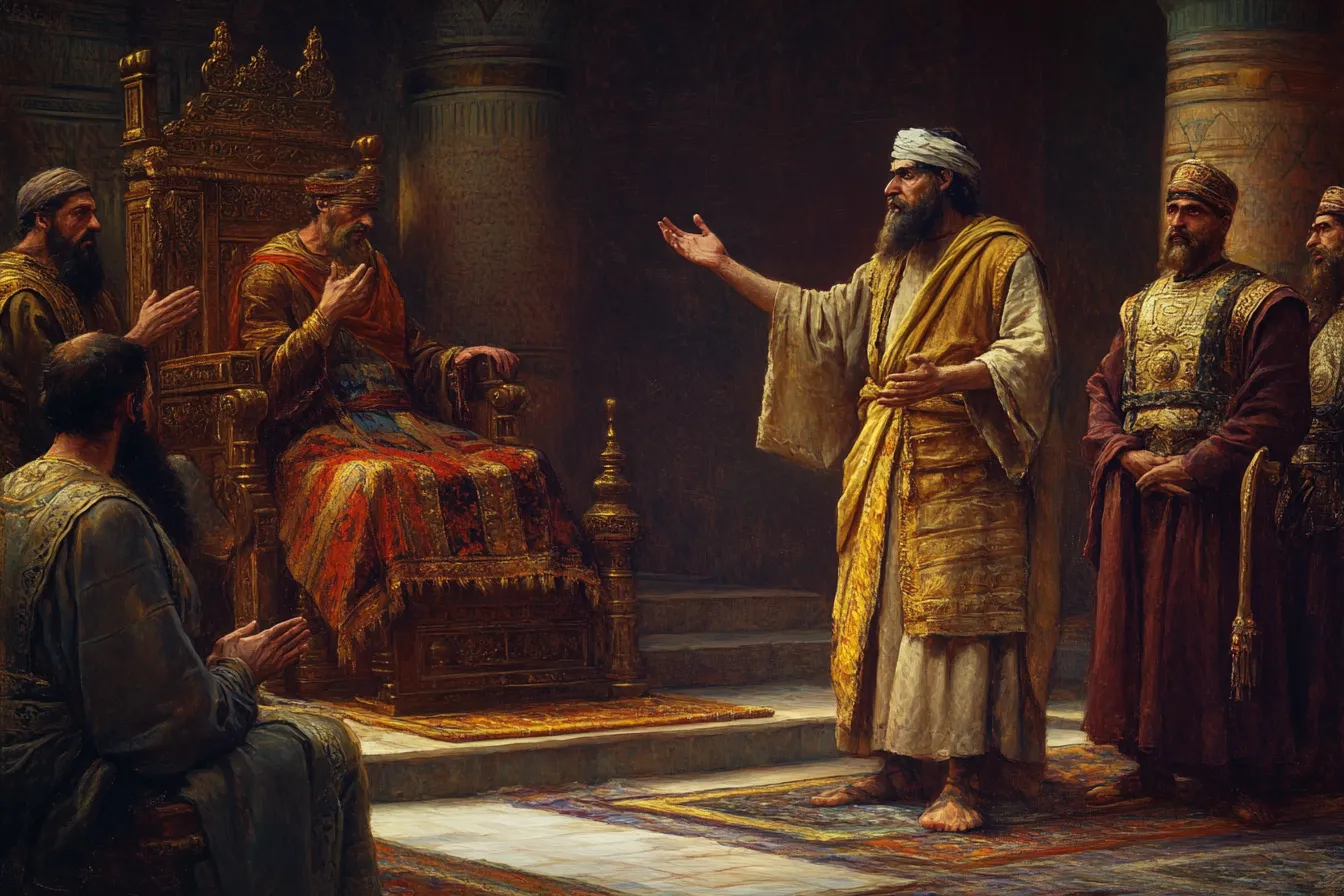
To explore a deeper meaning of the text, I began with the Hebrew behind “raise up seed.” In Genesis 38:8 the word is zera‘, “seed” or “offspring,” but the New King James Version translates the phrase “raise up an heir to your brother,” because in a levirate marriage the seed was the heir.1 The Book of Mormon gives the word a deeper meaning still. Abinadi asks, “who shall be his seed?” and answers that those who hear the prophets and believe “are the heirs of the kingdom of God.” If that is what seed means, then “raise up seed unto me” may mean raising up heirs of the kingdom.
King James translation: “And Judah said unto Onan, Go in unto thy brother’s wife, and marry her, and raise up seed to thy brother.”2
New King James Version: “And Judah said to Onan, ‘Go in to your brother’s wife and marry her, and raise up an heir to your brother.’”3
The word used for “seed” in Hebrew is ze-ra‘, which can mean seed, grain, offspring, child, son, descendants, or posterity.4 We don’t have the original text of the Book of Mormon and can’t be certain, but it seems likely that its use of “seed” would derive from the same Hebrew word found in Genesis.
Who Shall Be His Seed?
Thankfully, the Book of Mormon provides additional context and commentary on the meaning of this word. The prophet Abinadi, while addressing the priests of King Noah, quotes Isaiah 53, which also uses the word ze-ra‘:5
“Yet it pleased the Lord to bruise him; he hath put him to grief; when thou shalt make his soul an offering for sin he shall see his seed, he shall prolong his days, and the pleasure of the Lord shall prosper in his hand.”6
Here the seed isn’t physical descendants. The Messiah had none.
Abinadi explains the verse: “And now I say unto you, who shall declare his generation? Behold, I say unto you, that when his soul has been made an offering for sin he shall see his seed. And now what say ye? And who shall be his seed?”7
In this moment, Abinadi responds directly to Isaiah’s words, answering the question in Isaiah 53:8: “Who shall declare his generation?” The word “declare” means “to make clear or make plain,” while “generation” refers to “the act of begetting” or producing offspring.8 It might be rephrased as, “Who will make clear those who are begotten of the Lord?” Abinadi challenges the priests directly, asking them if they understand: “Behold, I say unto you, that when his soul has been made an offering for sin he shall see his seed. And now what say ye? And who shall be his seed?”
Without waiting for their response, he provides the answer himself: “Behold I say unto you, that whosoever has heard the words of the prophets, yea, all the holy prophets who have prophesied concerning the coming of the Lord—I say unto you, that all those who have hearkened unto their words, and believed that the Lord would redeem his people, and have looked forward to that day for a remission of their sins, I say unto you, that these are his seed, or they are the heirs of the kingdom of God”9
Christ’s seed are those who hear the words of his messengers, the prophets, and hearken to them. They “are the heirs of the kingdom of God.” Read that way, Jacob 2:30 says: “For if I will, saith the Lord of Hosts, raise up [heirs of the kingdom of God] unto me, I will command my people.”
The church’s interpretation gives “one reason for God to command it”: “to increase the number of children born in the gospel covenant in order to ‘raise up seed unto [the Lord].’”10 Abinadi’s answer suggests that “raising up seed” requires more than being born. It requires being reborn.
Abinadi explains that the “seed” of Christ are not physical descendants but those who:
- Hear the words of the prophets.
- Hearken unto their words.
- Believe that the Lord would redeem His people.
- Look forward to that day for a remission of their sins.
Begotten of the Lord
Other prophets in the Book of Mormon also help us understand who are “begotten of the Lord.” King Benjamin, after offering a covenant to his people, declared:
“And now, because of the covenant which ye have made ye shall be called the children of Christ, his sons, and his daughters; for behold, this day he hath spiritually begotten you; for ye say that your hearts are changed through faith on his name; therefore, ye are born of him and have become his sons and his daughters”11
Their hearts were changed through faith on His name, marking them as spiritually reborn. This theme of a “change of heart” appears throughout the Book of Mormon. Alma the Younger asks the people at Zarahemla: “Have ye experienced this mighty change in your hearts?”, connecting spiritual rebirth with becoming true followers of Christ.12 Later, in Alma’s ministry among the Zoramites, he explains that this change comes through exercising faith, planting the word of God in their hearts, and allowing it to grow.13
Perhaps the clearest example is the people of King Lamoni, who experienced a complete spiritual transformation, declaring that their hearts had no more desire to do evil but to do good continually.14 Being begotten of him requires a change of heart, through faith on his name.
Just as a newborn takes the name of its father, we can take upon us the name of our new Father, Christ. Physical birth mirrors this. A baby’s lungs are filled with fluid until it takes its first breath, and that first breath closes the pathways the blood used in the womb, so the heart literally changes and blood flows in a new way. The Hebrew word for spirit, ruach, also means wind or breath. The first breath changes the heart.
This change of heart is more than symbolic; it should manifest in a transformed way of living. As King Benjamin’s people experienced, it means having “no more disposition to do evil, but to do good continually.”15 By entering into a covenant with God, we promise to serve Him and keep His commandments, opening the way for His Spirit to be poured out abundantly upon us. As Alma declared at the waters of Mormon:
“As a testimony that ye have entered into a covenant to serve him until you are dead as to the mortal body; may the Spirit of the Lord be poured out upon you; and may he grant unto you eternal life, through the redemption of Christ, whom he has prepared from the foundation of the world.”16
This covenant isn’t just about obedience. It is about becoming new creatures in Christ, filled with His Spirit and committed to His will. These heirs receive an inheritance, and that inheritance is the Kingdom of God.
As Alma explains, being “born again” is not optional. All mankind, men and women of every nation, must be changed from their fallen state to a state of righteousness through redemption. It is only by becoming sons and daughters of God, “new creatures,” that we are made heirs to His kingdom:
“And the Lord said unto me: Marvel not that all mankind, yea, men and women, all nations, kindreds, tongues and people, must be born again; yea, born of God, changed from their carnal and fallen state, to a state of righteousness, being redeemed of God, becoming his sons and daughters; And thus they become new creatures; and unless they do this, they can in nowise inherit the kingdom of God.”17
Paul teaches the same thing:
“The Spirit itself beareth witness with our spirit, that we are the children of God: And if children, then heirs; heirs of God, and joint-heirs with Christ; if so be that we suffer with him, that we may be also glorified together.”18
“It is in vain for persons to fancy to themselves that they are heirs with those, or can be heirs with them, who have offered their all in sacrifice, and by this means obtained faith in God and favor with him so as to obtain eternal life, unless they in like manner offer unto him the same sacrifice, and through that offering obtain the knowledge that they are accepted of him.”19
Becoming heirs of God and joint-heirs with Christ takes rebirth, covenant, and sacrifice. That is how we are prepared to inherit all that the Father has.
Holy Prophets
What prophets is Abinadi speaking of? At the time of his ministry, he would have referred to prophets who came before him, both in the Old World and the New World. Nephi taught that “all the prophets testified of Christ,”20 and Jacob similarly declared that “none of the prophets have written, nor prophesied, save they have spoken concerning this Christ.”21 What sets these prophets apart is their commission to testify of the Savior. Abinadi explains that those who “hear, hearken, believe, and look forward to that day for a remission of their sins” are transformed by their message.
The Prophet Joseph Smith taught that “faith comes by hearing the word of God.” In the Lectures on Faith, he quotes Paul, saying, “How then shall they call on him in whom they have not believed? And how shall they believe in him of whom they have not heard? And how shall they hear without a preacher?” (or one sent to tell them?)22 A preacher, one who is sent, delivers the word of God, which awakens faith in the hearts of the hearers: “So then faith comes by hearing the word of God.”23
This pattern also appears in the temple endowment. True messengers are sent directly from the presence of God as members of the Divine Council, bearing a message to the earth. Without these messengers, “how shall they hear without a preacher?” Without hearing the word of God from one who is sent, faith cannot take root.
Alma the Younger outlines this same pattern while recounting his father’s conversion and ministry. Alma explains that he “confined himself wholly to the high priesthood of the holy order of God, to the testimony of the word, according to the spirit of revelation and prophecy.”24 The first thing Alma did was to deliver the word of God to the people, beginning in Zarahemla. He recounts how the Lord delivered his father’s people “out of bondage by the power of his word.”25 Alma the Younger then asks the people to remember not only their physical captivity but their spiritual deliverance:
“Behold, he changed their hearts; yea, he awakened them out of a deep sleep, and they awoke unto God. Behold, they were in the midst of darkness; nevertheless, their souls were illuminated by the light of the everlasting word; yea, they were encircled about by the bands of death, and the chains of hell, and an everlasting destruction did await them.”26
Alma reminds them that they were saved: “Their souls did expand, and they did sing redeeming love. And I say unto you that they are saved.”27 Then, he poses an important question: “And now I ask of you, on what conditions are they saved? Yea, what grounds had they to hope for salvation?”28
Alma answers his own question giving us a key to salvation: “Behold, I can tell you—did not my father Alma believe in the words which were delivered by the mouth of Abinadi? And was he not a holy prophet? Did he not speak the words of God, and my father Alma believe them? And according to his faith there was a mighty change wrought in his heart.”29
Abinadi was one who was sent. He was sent by the Lord to prophesy to the people.30 Alma the Elder was saved because he “believed in the words which were delivered by the mouth of Abinadi.”31 By receiving a true messenger and repenting of his sins, “according to his faith there was a mighty change wrought in his heart.”32
This is the pattern of salvation. It requires a true messenger sent from the presence of God with a divine message. Those who respond in faith become the “seed” of God, spiritually begotten through faith on His name, and are declared the “heirs of the kingdom of God.”
In Romans 10, Paul connects the same ideas as Abinadi does, drawn from the same verses in Isaiah. The priests of King Noah questioned Abinadi by quoting Isaiah: “How beautiful upon the mountains are the feet of him that bringeth good tidings; that publisheth peace; that bringeth good tidings of good; that publisheth salvation.”33
Paul, reflecting on the rejection of the prophets, laments: “But they have not all obeyed the gospel. For Esaias saith, Lord, who hath believed our report?”34 Israel continually rejected the prophets, true messengers sent from the presence of God, despite their declarations of peace and salvation.
Rejecting the Messenger
This pattern of rejection perhaps explains why the Jews rejected Lehi and why the priests of Noah rejected Abinadi. They may have believed their king was the Messiah, and this caused them to reject the idea that another Messiah would come to save them. Margaret Barker notes in Christmas: The Original Story (2008):
“When Solomon was made king, he sat on the throne of the LORD as king (1 Chronicles 29:23), and all the people ‘bowed their heads and worshipped the LORD, the king’ (1 Chronicles 29:20, the literal translation of the Hebrew). The human king, in a way that they understood and we do not, was the LORD. He was the Son of God Most High with his people. This problem of the human nature and the divine nature was to perplex Christian thinkers for generations; it was one of the temple beliefs that was never explained, or rather, never put into the public domain”35
Abinadi confronts the priests: “Are you priests, and pretend to teach this people, and to understand the spirit of prophesying, and yet desire to know of me what these things mean?”36
To the priests, Abinadi’s message likely seemed anything but “good tidings” or a proclamation of peace. His stern warnings included denunciations of their hypocrisy, idolatry, wickedness, and abominations.37 He warns King Noah with three metaphors:38
- “As a garment in a furnace”
- “As chaff driven before the wind”
- “As a dry stalk of the field”
These metaphors reflect materials that cannot withstand the purifying fire required to pass into the presence of God. By contrast, those who can endure the fire are likened to precious stones, as Malachi declares: “They shall be mine, saith the Lord of hosts, in that day when I make up my jewels.”39 God will refine His people as silver and gold, as Zechariah describes: “I will bring the third part through the fire, and will refine them as silver is refined, and will try them as gold is tried.”40
Abinadi’s message wasn’t comfort. It was purification: only those who are prepared can stand before God.
An old saying holds that a refiner of silver knows the silver is ready when he can see his own reflection in it. That reminds us of Alma’s message after recounting Abinadi’s teachings: “Have ye received his image in your countenances?”41 Have we been changed enough to bear the likeness of Christ?
Abinadi’s prophecy came to pass. He warned the people of King Noah that they would be as “a garment in a furnace,”42 destined to be consumed by their wickedness. This prophecy is fulfilled in the literal burning of King Noah. After abandoning his people in their time of need, Noah is captured and, at the demand of his own people, suffers death by fire.43 It is what happens to those who reject true messengers.
Lehi boldly testified that “the things which he saw and heard, and also the things which he read in the book, manifested plainly of the coming of a Messiah, and also the redemption of the world.”44 It was this message, a Messiah and the need for redemption, that offended his listeners. The account explains: “When the Jews heard these things they were angry with him; yea, even as with the prophets of old, whom they had cast out, and stoned, and slain; and they also sought his life, that they might take it away.”45
Abinadi faced a similar rejection. His offense was declaring that “God himself should come down among the children of men” and redeem them. He challenged the priests of King Noah, reminding them:
“For behold, did not Moses prophesy unto them concerning the coming of the Messiah, and that God should redeem his people? Yea, and even all the prophets who have prophesied ever since the world began—have they not spoken more or less concerning these things? Have they not said that God himself should come down among the children of men, and take upon him the form of man, and go forth in mighty power upon the face of the earth?”46
A Messiah who was not merely a king representing the LORD on His throne, but God Himself, was intolerable to them. It directly contradicted the priests’ expectations and beliefs, rooted in the idea of their king as a divine representative. Abinadi’s proclamation crossed the line for them, leading to their formal accusation:
“Abinadi, we have found an accusation against thee, and thou art worthy of death. For thou hast said that God himself should come down among the children of men; and now, for this cause thou shalt be put to death unless thou wilt recall all the words which thou hast spoken evil concerning me and my people.”47
The rejection of a Messiah who was both divine and human mirrored the response to Lehi’s testimony. In both cases, the offense lay in the challenge to long-held beliefs and the refusal to accept the idea of redemption through a Messiah who would come down among men.
Joseph was trying to teach this message over and over, even in his Bible Translation he adds this to the words of John the Baptist, “Why is it that ye receive not the preaching of him whom God hath sent? If ye receive not this in your hearts, ye receive not me; and if ye receive not me, ye receive not him of whom I am sent to bear record; and for your sins ye have no cloak.”48
We must receive his messengers when they are sent into this world, and as Joseph said, “The world always mistook false prophets for true ones, and those that were sent of God they considered to be false prophets; and hence they killed, stoned, punished and imprisoned the true prophets, and they had to hide themselves ‘in deserts and dens, and caves of the earth’; and although the most honorable men of the earth, they banished them from their society as vagabonds; whilst they cherished, honored, and supported knaves, vagabonds, hypocrites, impostors, and the basest of men”49 It’s not going to be obvious, these messengers will most likely be cast out and their names will be had for good and evil.
The Good Seed
To develop faith, we must receive true messengers sent from the presence of God. As Abinadi taught, salvation comes through hearing, hearkening, believing, and acting upon the word of God delivered by those who are divinely commissioned. Alma is the example. By humbling himself and receiving Abinadi’s message, Alma not only experienced a mighty change of heart but also became a vessel through which others were brought to salvation. He dedicated his life to delivering the word of God and leading his people out of both physical and spiritual bondage.
Abinadi’s teachings reveal that those who receive true messengers become the “seed” of Christ, spiritually begotten through faith and repentance. They become “heirs of the kingdom of God,” inheriting the promises made to the faithful from the foundation of the world. Messengers sent by God, their message received by the humble, and lives changed by faith: this is the way to salvation.
In our time, the challenge remains the same. Are we willing to listen when God sends His messengers? Will we recognize their words as truth, even if they challenge our assumptions or come from unexpected sources? Just as in the days of Lehi and Abinadi, our willingness to receive the word of God is what transforms us into His seed, making us heirs of His eternal kingdom.
It’s worth noting that the original endowment ceremony included two witnesses instead of Peter, James, and John. Brigham Young later changed this to instill confidence in the First Presidency. However, we shouldn’t see these witnesses merely as representatives of the First Presidency but rather as messengers, or angels, sent from the presence of God.
Mortals, of course, can become these messengers. Margaret Barker explains: “The high priests and kings of ancient Jerusalem entered the holy of holies and then emerged as messengers, angels, of the LORD. They had been raised up, that is, resurrected; they were sons of God, that is, angels; and they were anointed ones, that is, messiahs.”50 While these symbols are meaningful, we shouldn’t confuse the symbolic role of the priest with the reality of a prophet like Lehi, who entered the true holy of holies and spoke with God.
Hyrum Smith understood the importance of distinguishing “the good seed” when he said: “We are in a different dispensation; it is the honest and pure in heart that will hearken to the everlasting covenant; they are those who are noble and good; they that give you food, and clothe you. We want the honest in heart—the virtuous—the noble; we want the good seed gathered here. Let all men repent, and the Elders gather out the good seed, and bring it to Nauvoo. We want you to understand that if you preach anything wrong, you will be published. We don’t want bogus makers, counterfeiters, or preachers of the spiritual wife system.”51
The Jews of Christ’s time believed they were saved simply because they were the literal seed of Abraham. Jesus told them otherwise, teaching that being Abraham’s descendants was not enough. He declared that repentance and acceptance of His word were necessary for true freedom and salvation. As He explained, “If ye were Abraham’s children, ye would do the works of Abraham.”52 Without repentance, even Abraham’s seed would be cut off from the blessings of the covenant. Nephi echoed this truth, stating, “As many of the Jews as will not repent shall be cast off.”53 The same principle applies to Latter-day Saints today. It doesn’t matter if someone is “born in the covenant”; salvation requires personal repentance and a change of heart through faith in His name.
We all have the opportunity to receive a messenger sent from the presence of God. Joseph Smith was one such messenger, a choice seer preserved for the last days to “do a work” that “shall be of great worth unto [us]” if we are willing to receive it.54 While some may abandon the work that Joseph accomplished, you don’t have to. You can choose to embrace and preserve the truths he brought forth.
You can take the Book of Mormon as the keystone of your personal religion. You can study and cherish his inspired translation of the Bible. You can trust the Book of Abraham, which expands our understanding of the cosmos, the plan of salvation, and our eternal identity. You can accept the Lectures on Faith, prepared with great care to teach the saints the principles of faith and salvation. And you can seek to recover and study his revelations as they were originally delivered. Each of these gifts was given to you through Joseph’s hand, a part of the sacred work entrusted to him by God.55
Just as Joseph of Egypt was sent before and gathered wheat to preserve the family of Israel during famine, so too will Joseph Smith’s work gather the righteous, the seed and the wheat, of the last days. As Joseph of Egypt prophesied: “For the thing, which the Lord shall bring forth by his hand, by the power of the Lord shall bring my people unto salvation.”56 Joseph’s work is an instrument of gathering for all who are willing to receive it.
So when the Lord says, “if I will… raise up seed unto me,” the seed he wants may not be more children, but more heirs: people who hear his messengers, believe, and are born again. That seed isn’t raised up by taking more wives. It is raised up by the word.
Notes
- Genesis 38:8 in parallel translations; the word-for-word Hebrew is on BibleHub’s interlinear page. I’ve written about levirate marriage here: Raise Up Seed: Levirate Marriage ↩
- Genesis 38:8 ↩
- Genesis 38:8, NKJV ↩
- Strong’s Lexicon: ze-ra‘ ↩
- Isaiah 53:10 Hebrew Text Analysis ↩
- Mosiah 14:10; see Isaiah 53:10 ↩
- Mosiah 15:10–11 ↩
- Declare | Generation ↩
- Mosiah 15:11 ↩
- Plural Marriage and Families in Early Utah ↩
- Mosiah 5:7 ↩
- Alma 5:14 ↩
- Alma 32:28–30 ↩
- Alma 19:33, Alma 24:19 ↩
- Mosiah 5:2 ↩
- Mosiah 18:13 ↩
- Mosiah 27:25–26 ↩
- Romans 8:16–17 ↩
- Lectures on Faith 6:8 ↩
- 2 Nephi 25:26 ↩
- Jacob 7:11 ↩
- Lectures on Faith 3:1, Romans 10:14–17 ↩
- LOF 3:1, Joseph used his translation of the Bible for the Lectures on Faith. This verse shows an important change. ↩
- Alma 4:20 ↩
- Alma 5:5 ↩
- Alma 5:7 ↩
- Alma 5:9 ↩
- Alma 5:10 ↩
- Alma 5:11–12 ↩
- Mosiah 12:1–2 ↩
- Alma 5:11 ↩
- Alma 5:12 ↩
- Mosiah 12:20, Isaiah 52:7 ↩
- Romans 10:16, see Isaiah 53:1 ↩
- Margaret Barker, Christmas: The Original Story (2008), p. 10 ↩
- Mosiah 12:25 ↩
- Mosiah 11:2–4; Mosiah 12:27–29 ↩
- Mosiah 12:9–12 ↩
- Malachi 3:17 ↩
- Zechariah 13:9 ↩
- Alma 5:14 ↩
- Mosiah 12:10 ↩
- Mosiah 19:20 ↩
- 1 Nephi 1:19 ↩
- 1 Nephi 1:20 ↩
- Mosiah 13:33–34 ↩
- Mosiah 17:7–8 ↩
- Joseph Smith Translation, Matthew 3:34 Joseph also used this expression here, “if you do not accuse each other God will not accuse you. If you have no accuser you will enter heaven; and if you will follow the Revelations and instructions which God gives you through me, I will take you into heaven as my back load. If you will not accuse me, I will not accuse you. If you will throw a cloak of charity over my sins, I will over yours— for charity covereth a multitude of sins.” – Joseph Smith History ↩
- “Try the Spirits” [Editorial], Times and Seasons, Apr. 1, 1842, 744 ↩
- Barker, Christmas: The Original Story, p. 5 ↩
- Hyrum Smith Discourse on Polygamy ↩
- John 8:39 ↩
- 2 Nephi 30:2 ↩
- 2 Nephi 3:7 ↩
- “While the pure in heart, and the wise, and the noble, and the virtuous, shall seek counsel, and authority, and blessings constantly from under thy hand.” – D&C 122:2 ↩
- 2 Nephi 3:15 ↩
Comments